
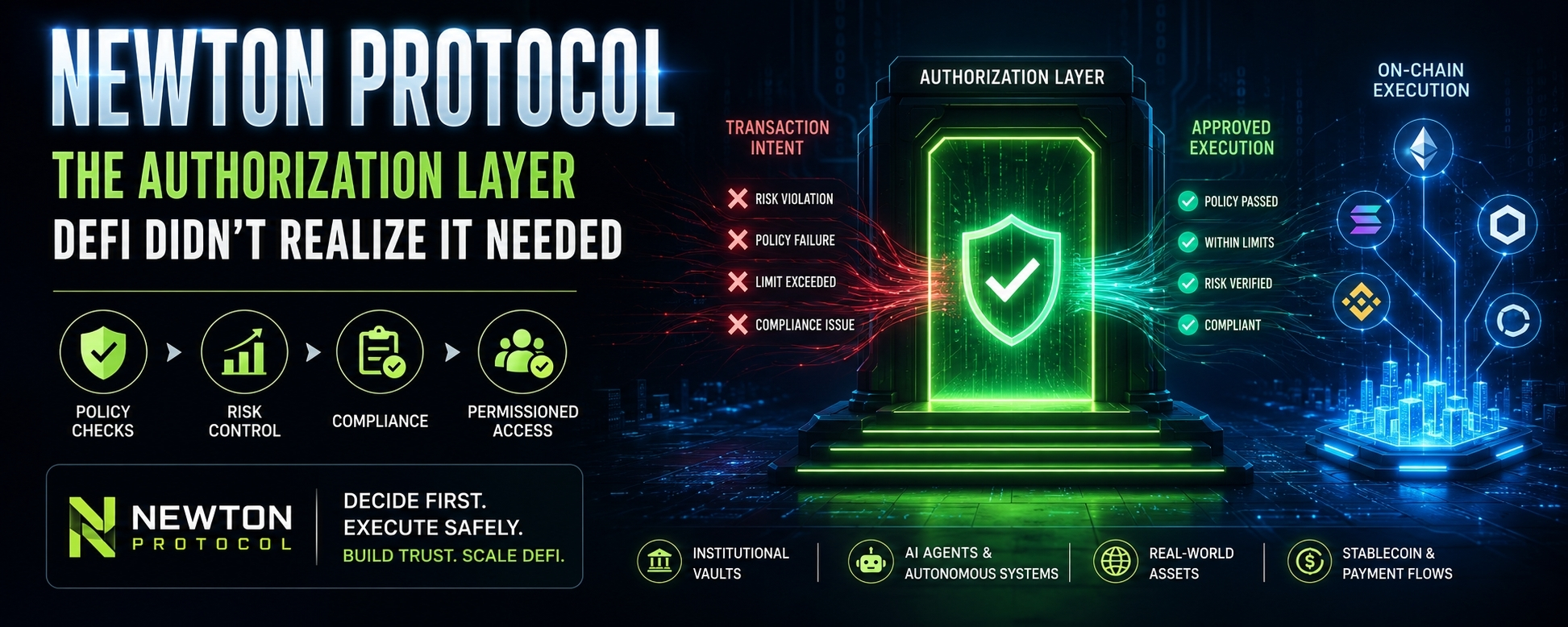
@NewtonProtocol Die meisten Blockchains sind in einer Sache unglaublich gut: der Ausführung. Wenn eine Wallet eine Transaktion korrekt signiert, verarbeitet das Netzwerk sie ohne Zögern. Dieses Design half dem Krypto-Sektor dabei, ein permissionless Finanzsystem zu schaffen, in dem Wert sich global bewegen kann, ohne dass Banken, Vermittler oder zentrale Genehmigungssysteme benötigt werden. Doch mit zunehmender Reife der Branche beginnt sich ein tiefergehendes Problem an der Oberfläche abzuzeichnen – Blockchains können zwar verifizieren, wer eine Transaktion signiert hat, aber sie haben weiterhin große Schwierigkeiten festzustellen, ob diese Transaktion überhaupt erst stattfinden sollte.
Diese Unterscheidung mag heute klein klingen, aber sie wird gewaltig, sobald ernsthaftes Kapital in das System eintritt.
Das klassische Finanzwesen verstand dieses Problem bereits vor Jahrzehnten. Banken lassen Geld niemals einfach deshalb bewegen, weil jemand Zugriff auf ein Konto hat. Bevor das Settlement stattfindet, durchlaufen Transaktionen stillschweigend Ebenen der Autorisierung, Risikoanalyse, Policchecks, Compliance-Systeme und interne Kontrollen. Die meisten Nutzer sehen diese Systeme im Hintergrund nie arbeiten, aber sie sind der Grund, warum sich Finanzwesen in großem Maßstab betreiben lässt, ohne in ein ständiges operatives Risiko zu kollabieren. Das System ist nicht nur dafür gebaut, Geld zu bewegen. Es ist dafür gebaut, zu entscheiden, wann Geld sich bewegen soll.
Krypto hat das Finanzwesen verändert, indem es viele dieser zentralisierten Ebenen entfernt hat. Das schuf Tempo, Offenheit und permissionless Innovation. Aber es schuf auch eine Umgebung, in der eine gültige Signatur fast die einzige Voraussetzung für die Ausführung wurde. Für kleinere Retail-Transaktionen funktioniert dieses Modell gut. Doch die Landschaft verändert sich rasant. DeFi-Tresore verwalten inzwischen Hunderte von Millionen. Stablecoins übernehmen das grenzüberschreitende Settlement. Assets aus der realen Welt beginnen, auf die Blockchain zu wandern. Autonome KI-Agenten dringen langsam in die finanzielle Infrastruktur ein. In dieser Welt wirkt es gefährlich unvollständig, sich nur auf Signaturen zu verlassen.
Eine Transaktion kann technisch gültig sein und dennoch Risiko-Policies verletzen, Treasury-Regeln, Compliance-Grenzen oder operative Schutzmaßnahmen. Ein Fondsmanager könnte versehentlich Expositionsgrenzen überschreiten. Ein automatisiertes System könnte ein Verhalten auslösen, das außerhalb vordefinierter Strategieparameter liegt. Ein KI-gesteuerter Treasury-Agent könnte Kapital so bewegen, dass es systemisches Risiko schneller erzeugt, als Menschen reagieren können. Die Blockchain selbst würde diese Transaktionen weiterhin verarbeiten, weil Ausführungsmaschinen den Kontext nicht verstehen. Sie verstehen nur Signaturen.
Genau hier beginnt „Newton Protocol“ (https://reference-url-citation.invalid/0) sich deutlich von den meisten Infrastrukturprojekten in einer ganz anderen Kategorie abzuheben.
Anstatt darum zu konkurrieren, eine weitere schnellere Chain oder eine weitere Scaling-Erzählung zu werden, konzentriert sich Newton darauf, eine Autorisierungsschicht aufzubauen, die programmierbare Policies bewertet, bevor Transaktionen das Settlement erreichen. Vereinfacht gesagt handelt das Protokoll wie ein Entscheidungsrahmen, der zwischen der Absicht einer Transaktion und der finalen Ausführung sitzt. Anstatt davon auszugehen, dass jede gültige Signatur automatisch eine Genehmigung verdient, ermöglicht Newton Systemen zu bewerten, ob eine Transaktion mit vordefinierten Regeln übereinstimmt, bevor die Blockchain sie verarbeitet.
Am einfachsten ist es, sich das über ein Verkehrssystem vorzustellen. Autos wissen bereits, wie sie sich bewegen. Ampeln wurden nie erfunden, weil Fahrzeugen die Motoren fehlten. Sie wurden eingeführt, weil Kreuzungen gefährlich werden, sobald zu viele unabhängige Akteure sich gleichzeitig bewegen, ohne zu koordinieren. Das grüne Licht bremst das System nicht — es ermöglicht, dass es sicher skaliert. Finanzwesen funktioniert ähnlich. Wenn Kapitalströme größer und komplexer werden, wird Entscheidungsinfrastruktur genauso wichtig wie Ausführungsinfrastruktur.
Diese Idee wird besonders wichtig, sobald institutionelles Finanzwesen tiefer in Krypto vordringt. Große Finanzakteure suchen nicht einfach nur nach schnelleren Transaktionen. Sie brauchen programmierbare Kontrollen, Risikogrenzen, delegierte Berechtigungen, Compliance-Strukturen und Autorisierungssysteme, die im großen Maßstab arbeiten können. Die nächste Phase von DeFi wird möglicherweise nicht allein dadurch definiert, wie schnell Transaktionen ausgeführt werden, sondern dadurch, wie intelligent Finanzsysteme im ersten Schritt bestimmen, welche Transaktionen eine Ausführung verdienen.
Was an Newtons Positionierung besonders interessant ist, ist, dass Autorisierung heute zu den am häufigsten übersehenen Infrastrukturkategorien im Krypto-Bereich zählt. Sie ist nicht spektakulär. Sie erzeugt keine Hype-Zyklen auf die gleiche Weise wie Meme-Coins oder High-Speed-Chains. Aber historisch gesehen wird die wichtigste finanzielle Infrastruktur oft unsichtbar, sobald sie korrekt funktioniert. Menschen bemerken selten die Systeme, die katastrophale Fehler verhindern. Sie bemerken sie erst, wenn diese Systeme nicht mehr existieren.
Da KI-Agenten, automatisierte Treasuries, tokenisierte Assets und institutionelle Tresore weiter in Onchain-Märkte expandieren, wird der Bedarf an programmierbaren Autorisierungsschichten wahrscheinlich parallel dazu wachsen. Krypto hat permissionless Ausführung bereits vor Jahren gelöst. Die nächste Herausforderung könnte darin bestehen, Systeme zu bauen, die intelligent genug sind zu verstehen, wann Ausführung selbst unsicher, nicht autorisiert oder außerhalb akzeptabler Grenzen ist.
Dieser Wandel könnte in den kommenden Jahren still und leise zu einer der größten strukturellen Weiterentwicklungen im dezentralen Finanzwesen werden.
Denn irgendwann wird die Branche möglicherweise nicht mehr nur danach fragen, ob Transaktionen stattfinden können.
Und beginnen sich zu fragen, ob jede gültige Transaktion überhaupt ein grünes Licht erhalten sollte.