
A Major Geopolitical Turning Point
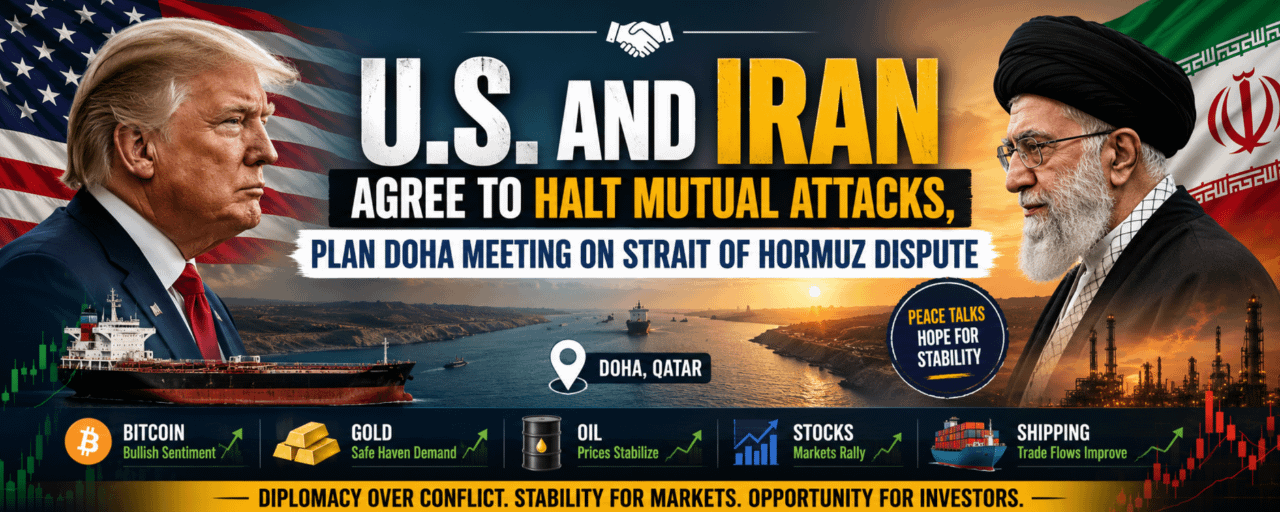
Global financial markets received one of the biggest geopolitical developments of the year after reports emerged that the United States and Iran have agreed to temporarily halt mutual military attacks and meet in Doha, Qatar, to negotiate the ongoing dispute surrounding the Strait of Hormuz.
According to multiple reports, the agreement follows days of heightened military tensions that threatened global trade, energy supplies, and investor confidence. Officials from both sides confirmed that negotiations will focus on restoring stability in one of the world's most important maritime routes while preventing further escalation.
For investors, this is much more than political news.
It could reshape the direction of oil prices, cryptocurrency markets, global equities, safe-haven assets, shipping companies, inflation expectations, and central bank policies over the coming weeks.
Let's break down exactly what is happening—and why every crypto investor should pay attention.
What Happened?
After several rounds of military exchanges that shook financial markets, Washington and Tehran reportedly reached an understanding to temporarily stop attacking each other while diplomatic negotiations resume.
The first official meeting is expected to take place in Doha, Qatar.
The primary objective:
• Prevent further military escalation
• Restore secure commercial navigation
• Resolve disagreements over the Strait of Hormuz
• Reduce risks to global energy supplies
Officials described the agreement as temporary rather than permanent, meaning markets may remain sensitive to future developments.
Why Is the Strait of Hormuz So Important?
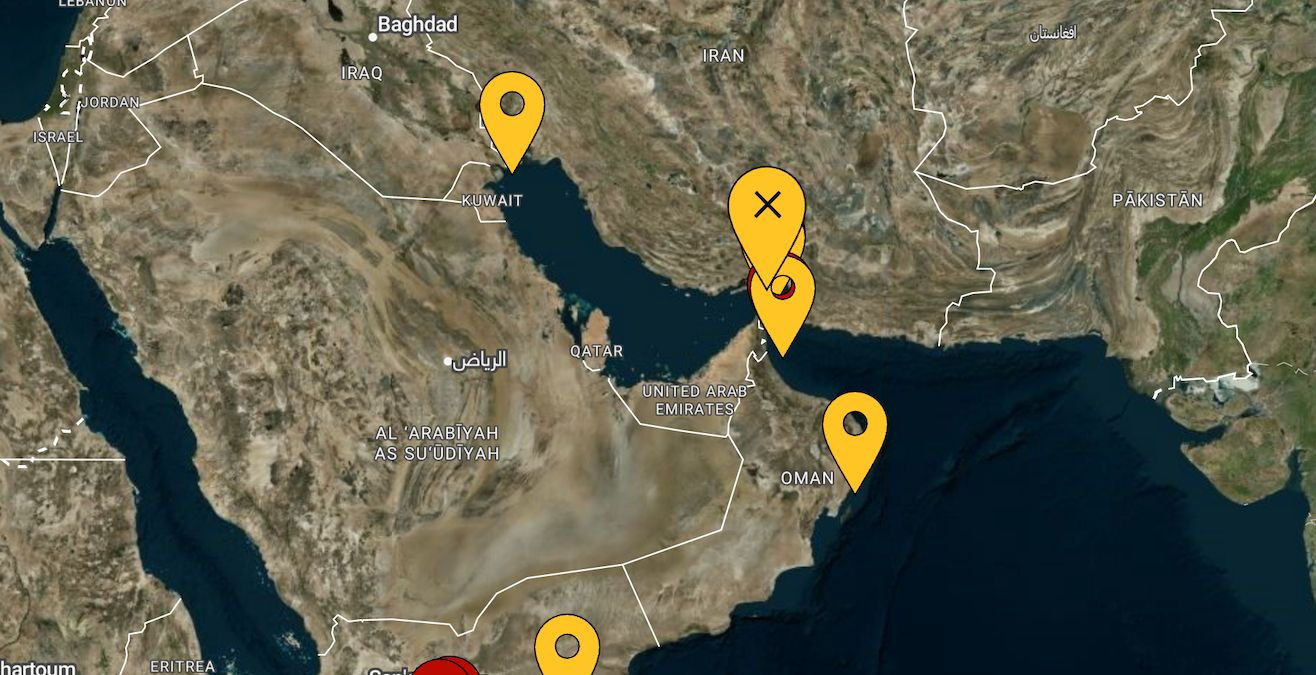
The Strait of Hormuz is arguably the single most important shipping lane for the global energy industry.
Every day, millions of barrels of crude oil and liquefied natural gas (LNG) move through this narrow waterway.
Roughly one-fifth of the world's seaborne oil trade passes through Hormuz.
Countries heavily dependent on this route include:
• Saudi Arabia
• United Arab Emirates
• Kuwait
• Iraq
• Qatar
• Iran
Major importers include:
• China
• India
• Japan
• South Korea
• Europe
Whenever military conflict threatens this route, global markets immediately react because any disruption could reduce energy supplies and increase transportation costs.
Why Markets Were Nervous
Before this diplomatic breakthrough, investors feared several worst-case scenarios:
• Closure of the Strait of Hormuz
• Rising oil prices above recent levels
• Global supply shortages
• Higher inflation worldwide
• Shipping disruptions
• Increased military conflict
• Risk-off sentiment across financial markets
Those fears drove volatility across nearly every asset class.
Immediate Market Reaction
Once reports of the ceasefire and Doha meeting emerged, investors quickly reassessed risk.
Markets interpreted the announcement as a potential de-escalation.
Although uncertainty remains, the probability of a full-scale regional conflict appears lower than just days ago.
Impact on Oil Markets
Oil is the biggest winner—or loser—depending on geopolitical developments.
Before the Agreement
Markets priced in:
• Supply disruptions
• Shipping delays
• Tanker insurance costs
• Possible shortages
These concerns pushed oil volatility higher.
After the Agreement
If negotiations succeed:
• Oil exports continue normally
• Shipping risk declines
• Insurance costs stabilize
• Supply fears ease
• Oil prices may remain contained instead of surging
Reuters reported oil steadied after news of the agreement, reflecting expectations that crude flows could continue while diplomacy proceeds.
However, because the deal is described as temporary, traders are likely to remain cautious.
Impact on Bitcoin ( $BTC )
Bitcoin often behaves differently depending on the type of crisis.
During military uncertainty:
Some investors sell Bitcoin to reduce risk.
Others buy Bitcoin as protection against traditional financial instability.
Now that tensions have eased:
Several outcomes become possible:
Scenario 1
Risk appetite improves.
Investors rotate back into growth assets.
Bitcoin benefits.
Scenario 2
Oil stabilizes.
Inflation expectations cool.
Interest-rate fears ease.
Crypto receives additional support.
Scenario 3
If negotiations fail later, volatility quickly returns.
Bitcoin could experience sharp price swings.
This makes geopolitical headlines especially important for crypto traders.
Ethereum and Altcoins
Altcoins typically react even more strongly than Bitcoin.
Lower geopolitical tension usually means:
• Higher trading activity
• More speculative investing
• Increased DeFi participation
• Improved market confidence
Coins that often benefit during improving risk sentiment include:
• Ethereum
• Solana
• BNB
• XRP
• Chainlink
• Sui
• Hyperliquid ecosystem tokens
If optimism continues, altcoins could outperform Bitcoin in percentage terms.
Stablecoins
Interestingly, geopolitical crises often increase stablecoin demand.
Investors seek USDT and USDC to protect capital while waiting for clarity.
If market confidence improves:
• Stablecoin demand may normalize
• Capital rotates back into BTC
• Capital rotates into altcoins
• DeFi activity increases
Gold ( $XAU )
Gold traditionally rises during geopolitical uncertainty.
During military escalation:
Investors rushed toward gold.
Now:
If diplomacy succeeds:
Gold demand could cool.
However, if negotiations collapse:
Gold may quickly resume its upward trend.
U.S. Dollar
The dollar's reaction depends on several factors.
Reduced geopolitical stress can:
• Improve global trade
• Support emerging markets
• Reduce demand for defensive assets
However, interest-rate expectations will continue to influence the dollar more than geopolitics alone.

Stock Markets
Equity investors generally welcome de-escalation.
Sectors likely to benefit include:
Technology
Artificial Intelligence
Semiconductors
Consumer discretionary
Travel
Airlines
Logistics
Shipping
Lower geopolitical risk often encourages investors to move back into growth stocks.
Market futures reportedly strengthened after news of the planned Doha meeting.
Energy Stocks
Oil producers experienced significant volatility during the crisis.
Companies connected to:
• Exploration
• Production
• Tanker shipping
• Refining
may continue seeing rapid price movements depending on headlines.
If oil stabilizes:
Energy shares could also stabilize.
Shipping Industry
Shipping companies closely monitor the Strait of Hormuz.
Reduced conflict means:
• Lower insurance premiums
• Fewer reroutes
• Faster deliveries
• Lower freight uncertainty
This benefits global trade.
Inflation Outlook
Oil plays a central role in inflation.
Higher oil prices increase:
• Transportation costs
• Manufacturing expenses
• Food prices
• Utility costs
If diplomacy prevents another oil spike, inflation pressure may ease.
That could indirectly support:
• Stocks
• Crypto
• Bonds
• Consumer confidence
Central Banks
Lower energy inflation provides central banks with more flexibility.
While monetary policy depends on many factors, reduced geopolitical pressure may lessen concerns about energy-driven inflation shocks.
Emerging Markets
Emerging economies that rely heavily on imported oil could benefit significantly.
Lower energy costs improve:
• Trade balances
• Government budgets
• Currency stability
• Consumer spending
Why Crypto Traders Should Watch Doha Carefully
The Doha meeting is now one of the most important geopolitical events for financial markets.
Investors will be watching for signs of:
• Permanent ceasefire
• Maritime security guarantees
• Shipping agreements
• Nuclear negotiations
• Sanctions discussions
• Regional cooperation
Positive developments could further strengthen investor confidence.
Negative developments could immediately increase volatility across every market.
Risks Still Remain
Despite today's optimistic headlines, several risks remain.
The agreement is temporary.
Military misunderstandings remain possible.
Political disagreements could resurface.
Shipping incidents could occur unexpectedly.
Markets are therefore unlikely to become completely complacent.
Volatility remains part of the investment landscape.
What This Means for Crypto Investors
For Binance users and crypto traders, this news is important because macroeconomic events increasingly influence digital assets.
If peace negotiations continue successfully:
✅ Oil prices may remain stable
✅ Inflation fears may ease
✅ Risk assets could strengthen
✅ Bitcoin sentiment may improve
✅ Altcoins could outperform
If negotiations fail:
❌ Oil may spike
❌ Gold could rally
❌ Stocks may fall
❌ Crypto volatility could return
Final Thoughts
The decision by the United States and Iran to temporarily halt mutual attacks and hold negotiations in Doha represents one of the most significant geopolitical developments of the year. While the agreement does not guarantee lasting peace, it offers financial markets a welcome pause after weeks of uncertainty.
For cryptocurrency investors, the event highlights an increasingly important reality: Bitcoin and digital assets no longer trade in isolation. Geopolitical risks, energy markets, inflation expectations, central bank policies, and global investor sentiment are now deeply interconnected.
The coming Doha talks will likely determine whether this diplomatic breakthrough evolves into a broader agreement—or whether markets once again face heightened volatility. Until then, traders should remain informed, manage risk carefully, and monitor both macroeconomic and crypto-specific developments.
#USIran #iran #usa #StraitOfHormuz #Write2Earn $SKHYNIX #Doha #Bitcoin #BTC #Ethereum #ETH #CryptoNews #BinanceSquare #Oil #Gold #Stocks #Altcoins #Trading #Macro #Geopolitics #MarketAnalysis #CryptoMarket