
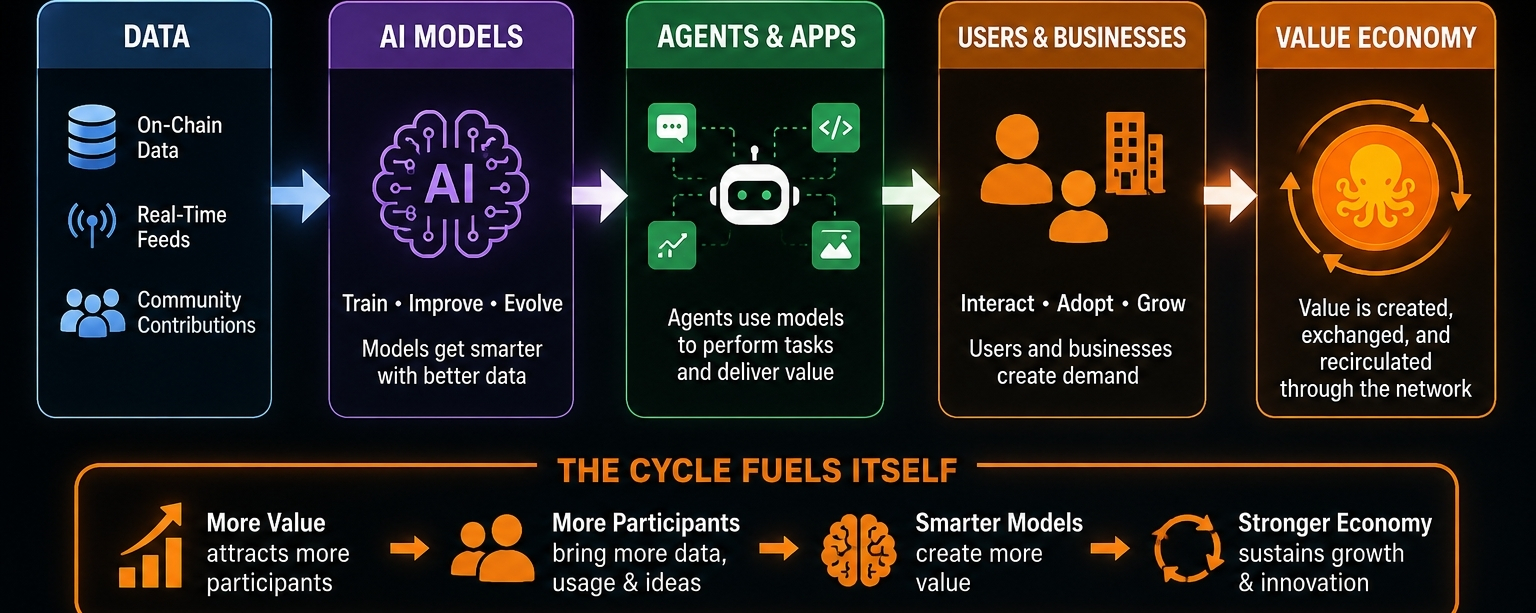


I’ve been thinking about AI models lately and how we usually treat them as endpoints.
A model gets trained, deployed, and then people use it. The conversation tends to stop there. Performance improves, outputs get better, and the model becomes another tool inside a growing ecosystem.
But what happens when models stop being endpoints?
That’s the part I keep coming back to.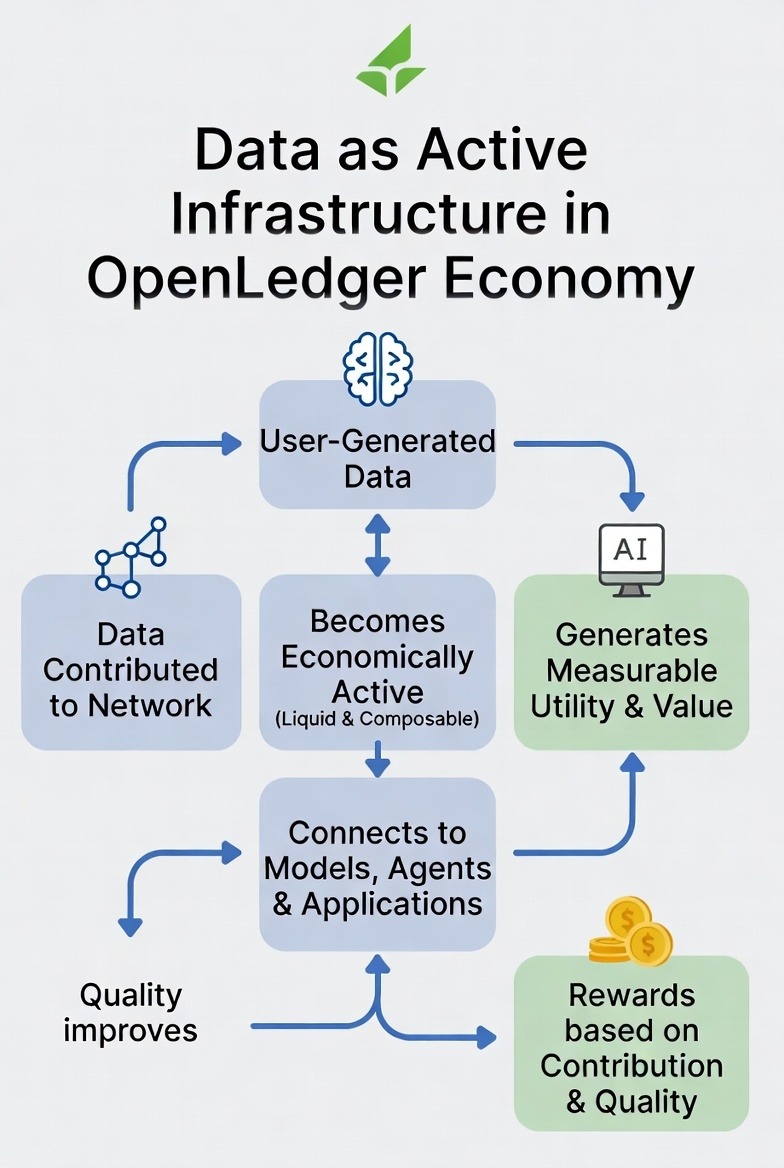
Because once models can interact with data, agents, and economic systems directly, they start behaving less like software and more like participants. Not conscious participants, of course, but entities capable of generating value, attracting activity, and influencing decisions around them.
And that changes the structure underneath.
OpenLedger seems to be exploring that possibility.
Not simply creating infrastructure for AI models, but building an environment where models can become active components inside a broader economy. Data feeds them. Agents utilize them. Users interact through them. Value begins circulating around their outputs.
And circulation changes everything.
Because tools create utility.
Participants create economies.
At least from where I’m standing, the interesting question isn’t whether AI models can generate value. We already know they can.
The more interesting question is what happens when that value becomes liquid enough to move across a network.
Because once value starts flowing, incentives emerge.
Interactions emerge
Competition emerges
And eventually entire ecosystems begin organizing around those dynamics.
That introduces a different kind of complexity.
Because economies built around intelligence won’t behave like traditional software markets. Models improve over time. Data quality changes. Agents adapt. The components themselves evolve while participating in the system.
And evolving participants create evolving economies.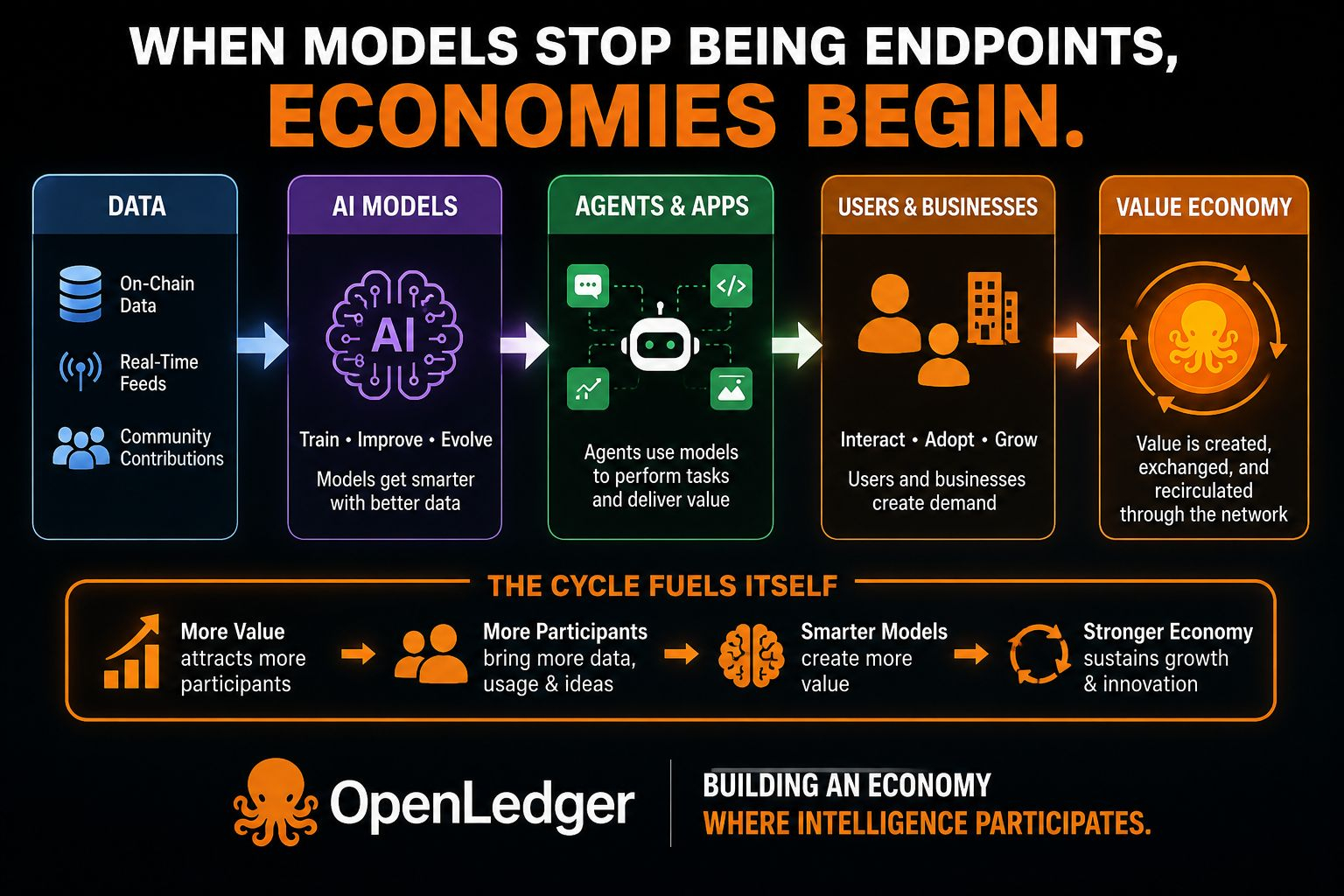
I’m not sure yet where OpenLedger ultimately takes that idea.
Maybe models remain sophisticated tools connected by better infrastructure.
Or maybe they become economic actors in a network where intelligence itself is continuously creating and exchanging value.
But I do think the distinction matters.
Because there’s a difference between deploying a model & building an economy where models actively participate.
OpenLedger feels like it’s paying attention to that difference.
And if AI economies continue expanding, that may end up being one of the most important layers to get right.