
I didn’t expect this to stand out.
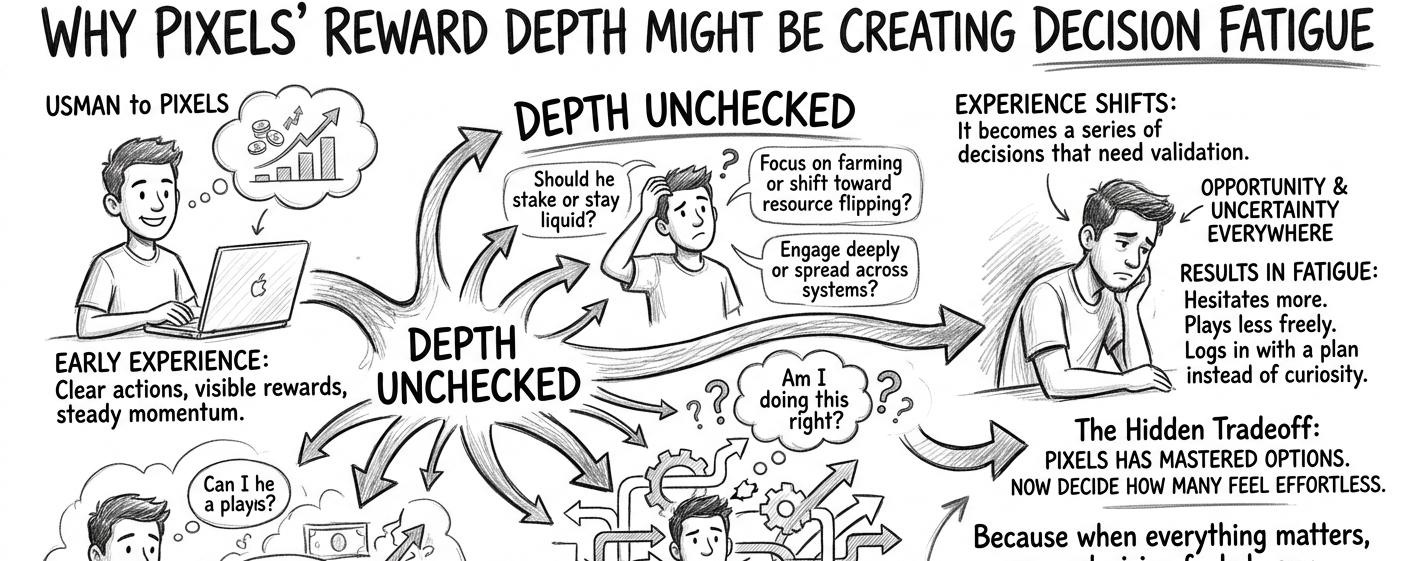
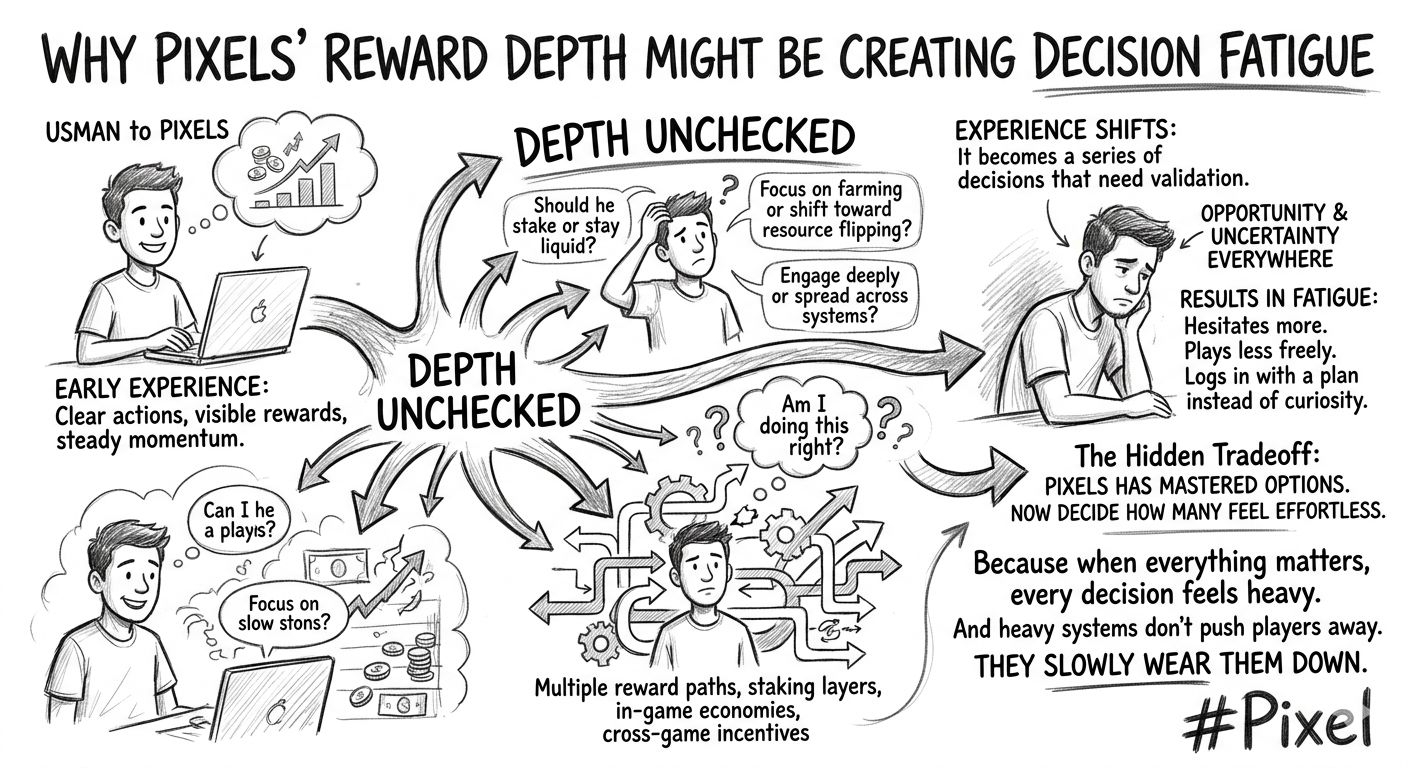
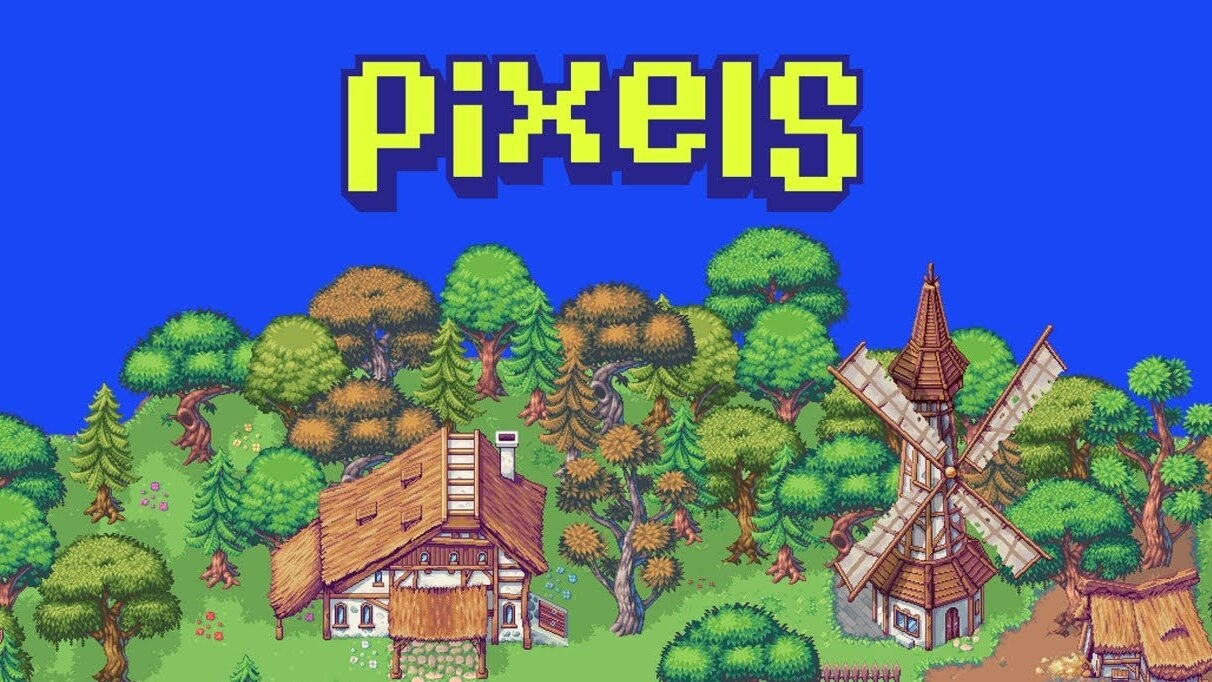
Most GameFi projects suffer from lack of depth. Pixels has the opposite problem. Multiple reward paths, staking layers, in-game economies, cross-game incentives—it’s a system with real substance.
And that’s impressive.
But depth, when unchecked, turns into pressure.
Let me explain it through someone I’ll call Usman.
He logs into Pixels with a simple goal: play, progress, earn a little on the side. The early experience works. Clear actions, visible rewards, steady momentum.
Then the options expand.
Should he stake or stay liquid?
Focus on farming or shift toward resource flipping?
Engage with one loop deeply or spread across multiple systems?
None of these are bad choices.
That’s the problem.
Every path has potential, but none feel clearly optimal without deeper analysis. So instead of playing naturally, Usman starts thinking constantly.
Am I doing this right?
That question changes everything.

Because once a player moves from instinct to calculation, the experience subtly shifts. It’s no longer just a game. It becomes a series of decisions that need validation.
Pixels has built a system where opportunity is everywhere.
But so is uncertainty.
And over time, that creates fatigue.
Usman doesn’t quit. He just hesitates more. Plays less freely. Logs in with a plan instead of curiosity.
That’s the hidden tradeoff.
Pixels has mastered giving players options.
Now it has to decide how many of those options should feel effortless.
Because when everything matters, every decision feels heavy.
And heavy systems don’t push players away.
They slowly wear them down.
#WhatNextForUSIranConflict #AltcoinRecoverySignals? #ARKInvestReducedPositionsinCircleandBullish #KelpDAOFacesAttack $SIREN $TAO