
We manage risks every single day, often without realizing it. From driving a car to making long-term plans about health or insurance, risk assessment is something humans do almost instinctively. But when it comes to financial markets, especially trading, risk management becomes a conscious and decisive factor that separates those who survive from those who don’t.
In trading, most losses don’t come from not knowing indicators. They come from poor reactions to risk. A trader can lose money simply because the market moves against their position, but more often, losses are amplified when emotions take over. Panic selling, revenge trading, or abandoning a plan halfway through a trade are patterns that wipe accounts far faster than any bad entry.
This emotional breakdown is especially visible during bear markets and capitulation phases. Volatility increases, confidence drops, and many traders abandon their original strategy right when discipline matters most. At that point, indicators stop helping if risk is not already under control.
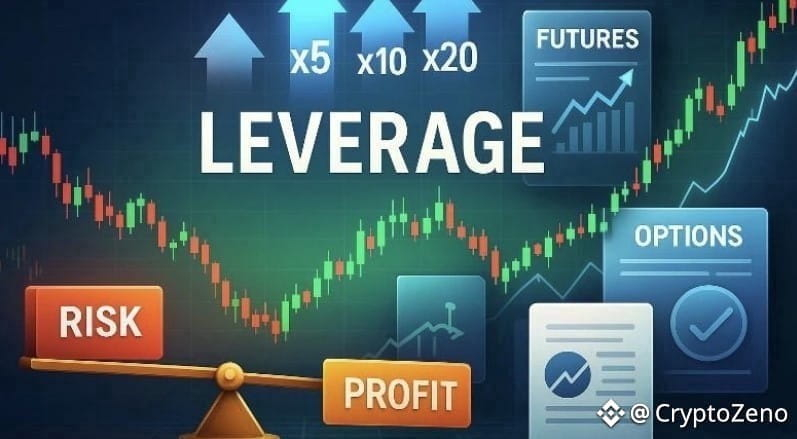
That’s why risk management is not an optional add-on to a trading system. It is the foundation. In its simplest form, it can be as basic as defining where to cut losses or where to secure profits. But at a deeper level, it is a framework that defines how a trader reacts under pressure, across different market conditions.
A robust trading approach always provides clarity before the trade begins. What happens if price goes against you? What action do you take if volatility spikes? What is the maximum damage this trade can do to your account? When these questions are answered in advance, decision-making becomes mechanical rather than emotional.
Risk management itself is not static. Markets change, volatility shifts, and strategies that worked before may no longer be optimal. Because of that, risk control methods should be reviewed and adjusted continuously, not treated as a one-time setup.
In practice, traders face multiple types of risk. Market risk is the most obvious one, where price moves against a position. This is commonly managed through stop-loss orders that automatically close trades before losses grow beyond control. Liquidity risk appears when trading low-volume assets, where entering or exiting a position becomes difficult without slippage. This risk is reduced by focusing on high-volume, highly capitalized markets.
There is also credit risk, which becomes relevant when using platforms or counterparties that cannot be trusted. Choosing reliable exchanges significantly reduces this exposure. Operational risk, on the other hand, relates to failures within projects or systems themselves. In crypto, this can include smart contract bugs, team issues, or infrastructure failures, which is why research and portfolio distribution matter.
Systemic risk is harder to predict. It refers to events that affect the entire market, such as regulatory shocks or macroeconomic crises. While it cannot be eliminated, exposure can be reduced by spreading capital across assets or narratives that are not perfectly correlated.
To manage these risks, traders usually rely on a combination of practical strategies rather than a single rule. One widely used principle is the 1% risk rule. This approach limits the potential loss of any single trade to a small portion of total capital. Whether through position sizing or stop-loss placement, the idea is simple: no single mistake should be able to destroy the account.
Another essential tool is the use of stop-loss and take-profit orders. Defining exit points before entering a trade removes emotion from the equation. It also allows traders to calculate the risk-reward ratio in advance, ensuring that potential gains justify the risk taken. Knowing when to exit is often more important than knowing when to enter.
Some traders also use hedging to reduce exposure. By holding opposing positions, losses in one direction can be partially offset by gains in another. In crypto, this is often done through futures markets, allowing traders to hedge spot holdings without selling the underlying asset.
Diversification plays a role as well, particularly in crypto. Concentrating capital into a single asset or narrative increases vulnerability. Spreading exposure across different projects limits the maximum damage any single failure can cause.
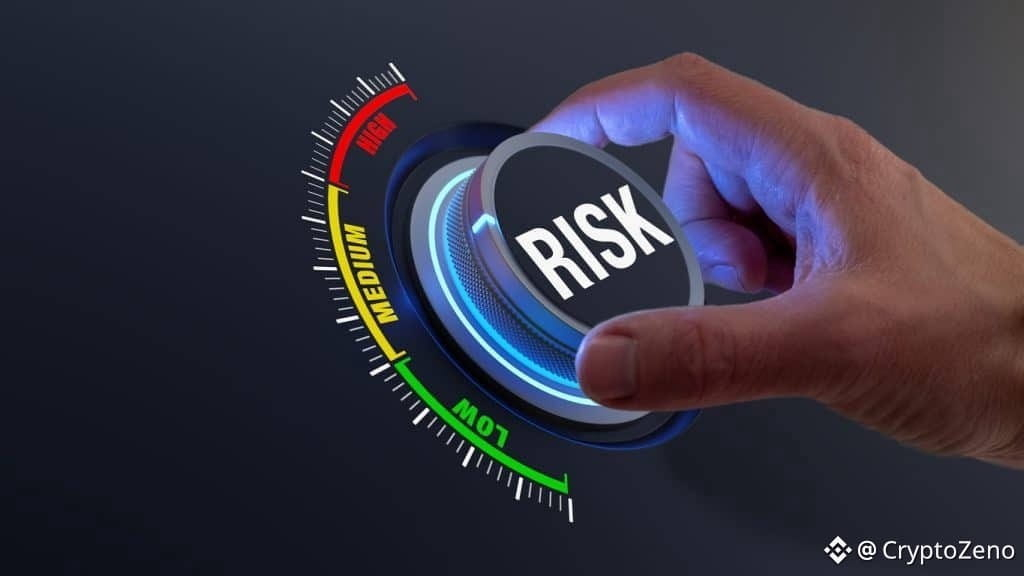
Finally, the risk-reward ratio ties everything together. A trade where potential loss outweighs potential gain is rarely worth taking, regardless of how strong the setup looks. Over time, prioritizing favorable risk-reward scenarios allows traders to stay profitable even with a modest win rate.
In the end, risk management does not eliminate losses. Losses are unavoidable in trading. What risk management does is decide whether those losses are survivable or fatal. It defines how efficiently unavoidable risks are taken and how long a trader can stay in the game.
Most accounts are not blown by bad indicators. They are blown by ignoring risk, abandoning discipline, and letting emotions override structure. And that is the mistake that wipes more accounts than anything else.
#CryptoZeno #US-IranTalksFailToReachAgreement