
Market felt weirdly quiet today. Charts were flat, everyone was doom-scrolling the same threads about the next ETF rumor, and I caught myself doing what I usually do when nothing’s moving—digging into random on-chain flows just to stay sharp. Out of curiosity I clicked on a tweet about a UK bank tokenizing real deposits, and somehow that pulled me straight into Midnight Network and their $NIGHT token.
That’s when the click happened.
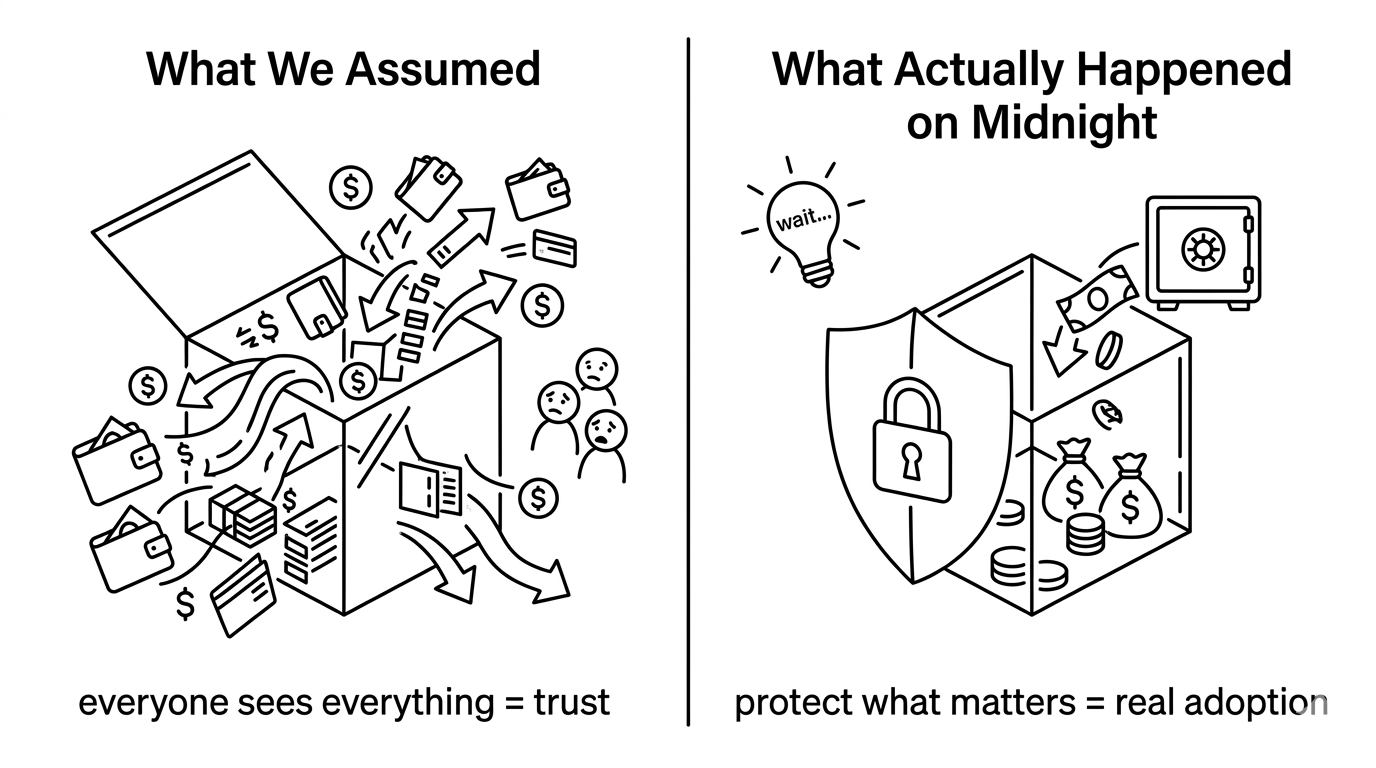
Wait… people are actually looking at this whole open-ledgers-versus-confidential-systems thing completely backwards. We’ve spent years praising open ledgers like they’re some purity test for blockchain—everything visible, everything verifiable, so “trust” is automatic. But the moment I saw Monument Bank quietly moving £250 million in retail deposits onto Midnight this week, it hit me sideways. The open ledger isn’t the hero. It’s the thing quietly killing real utility.
Here’s the part that actually happened. People assume open means safe and honest, confidential means shady and hidden. What actually plays out on Midnight is the opposite: the public ledger handles the stuff that needs to be seen—governance, $NIGHT token movements, the basics everyone can audit. Then the confidential side, the shielded layer, quietly does the heavy lifting for anything sensitive. No full exposure, just zero-knowledge proofs that let you prove “this is legit” without showing the receipts to the entire internet. I thought that was just marketing fluff until I traced the bank announcement and realized they picked Midnight exactly because the confidential system lets them keep customer data protected while still satisfying compliance. Not hiding. Protecting.
I caught myself hesitating right there—because honestly, I used to roll my eyes at privacy chains. Figured they were either Monero-style full anonymity that regulators hate, or vaporware that never ships. But this hybrid actually shipped, and the bank money is real. It affects the exact people we keep saying we want in crypto: institutions, everyday users with actual savings, apps that can’t live on a public spreadsheet. When your salary, your medical records, or your trading strategy sits on an open ledger, it’s not trust—it’s exposure. Midnight flips that.
Here’s the part that still bothers me though. This “rational privacy” feels elegant on paper, but I’m not fully convinced it holds when the heat turns up. What if regulators decide selective disclosure isn’t enough and start demanding backdoors? Or what if the very institutions praising it today decide the confidential layer is too convenient and push for more openness later? It doesn’t sit right yet, like the system solved one tension only to create a new one I can’t quite name.
I thought the whole point of blockchain was radical transparency. But actually… maybe the smarter move was always controlled visibility.
Anyway, market still looks shaky out there. I’ll probably just keep watching how this one plays out.
@MidnightNetwork #night