

The situation for U.S. citizens across the Middle East has become increasingly tense as conflict spreads and security risks rise in several countries. In recent days, the U.S. government has updated travel warnings, reduced diplomatic staff in key locations, and urged Americans to leave certain areas as soon as it is safe to do so. While many people are calling it an “evacuation,” the reality is more complicated. This is not one single operation covering every country in the region. Instead, it is a patchwork of emergency advisories, embassy drawdowns, suspended services, and limited departure assistance depending on local conditions.
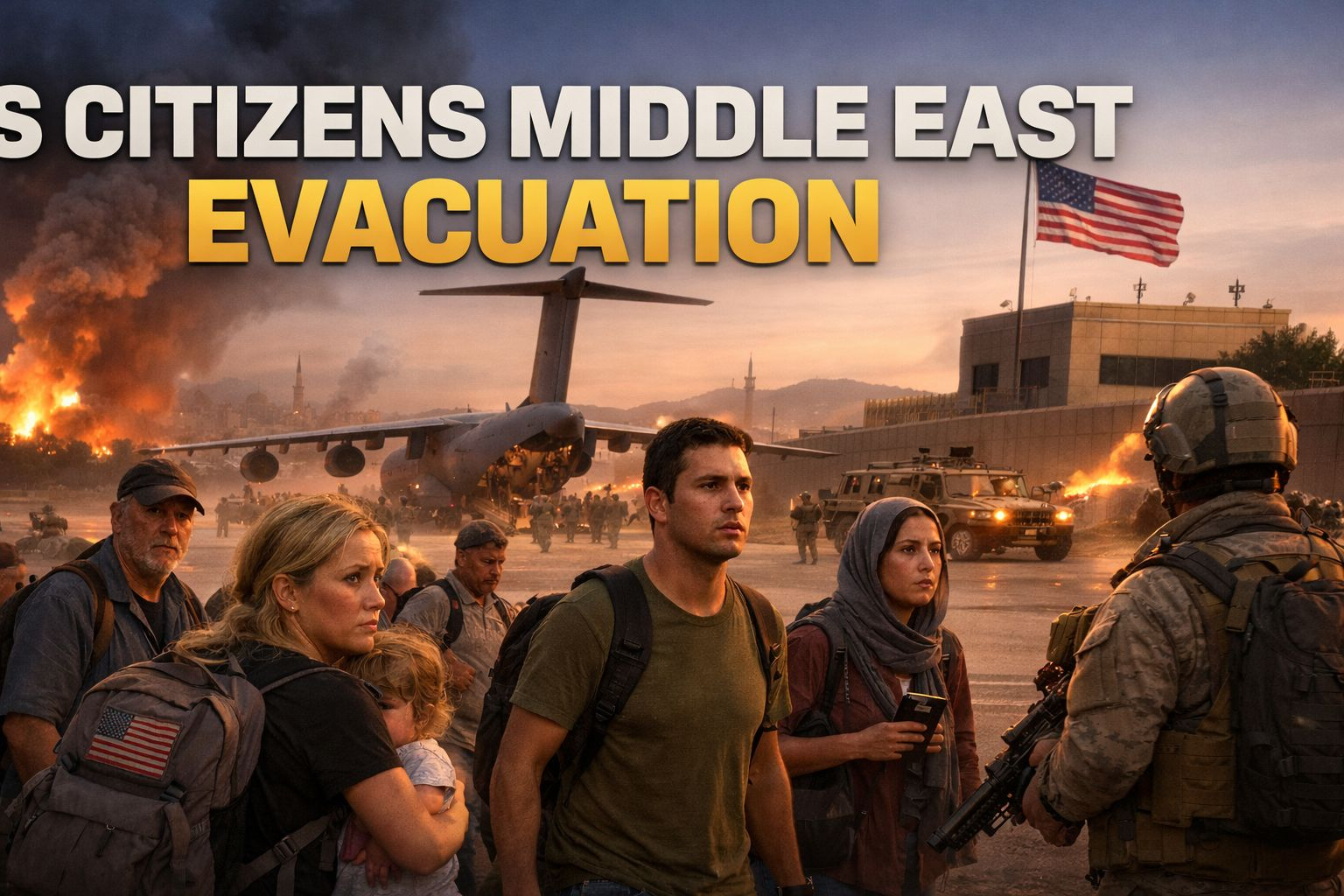
For many Americans, that distinction matters. A government warning to leave does not always mean planes are waiting or that the embassy can personally arrange a safe exit. In several countries, U.S. missions have made it clear that citizens should not rely on direct government evacuation and should use available commercial options while they still can. That has created confusion and fear, especially for travelers and families who expected a more direct rescue effort.
The biggest issue right now is that the crisis is moving faster than normal diplomatic systems can handle. Flights have been disrupted, some routes have been suspended, and regional airspace has become unpredictable. Even people ready to leave immediately may struggle to find a safe way out. In some places, embassies are operating with fewer staff, which means routine help is limited and emergency support may take longer than usual. For Americans on the ground, this has turned into both a security crisis and a logistical one.
The U.S. government has also taken different levels of action depending on the country. In some places, non-emergency U.S. personnel and their families have been ordered to leave. In others, departures have been authorized rather than required. That difference may sound technical, but it signals how serious the risk is in each location. At the same time, public travel advisories have become more urgent, with stronger language warning Americans not to travel or to leave immediately if they are already there.
What makes this especially difficult is the gap between official warnings and practical options. Telling people to get out is one thing. Actually moving thousands of civilians through a conflict zone with limited flights and changing border conditions is something else entirely. That is why many Americans have found themselves stuck—aware of the danger, but unable to leave quickly. Some have been searching for commercial tickets, others are exploring land routes, and many are waiting for more guidance while conditions remain unstable.
In response, U.S. officials have reportedly started looking at limited assisted departures in certain cases, including charter options and other emergency transport measures where commercial flights are no longer reliable. Still, even when help is available, it is not guaranteed, not immediate, and not always available to everyone at once. That means the burden remains heavily on individuals to make fast decisions, secure travel documents, stay alert, and move before options disappear.
For Americans still in the region, the message is simple but serious: leave while a safe route still exists, expect delays, and do not assume the embassy can solve every problem in real time. Travelers are being urged to follow embassy alerts closely, stay in contact with family, and enroll in official notification systems so they can receive emergency updates quickly.
This crisis is also exposing a larger truth that many people do not realize until moments like this. In a major regional conflict, U.S. embassies are not always able to carry out a large-scale evacuation on demand. Their first step is often to warn, reduce staff, and prepare for emergencies—not to launch a full rescue operation. That can be a harsh reality for citizens caught in rapidly changing conditions.
In the end, what is happening is not a single evacuation story, but a broader regional emergency. The United States is warning its citizens, reducing its diplomatic footprint, and trying to manage a dangerous and unstable situation across multiple countries at once. For those on the ground, the window to leave safely may depend less on official announcements and more on how quickly they can act before transportation, access, or security conditions worsen further.