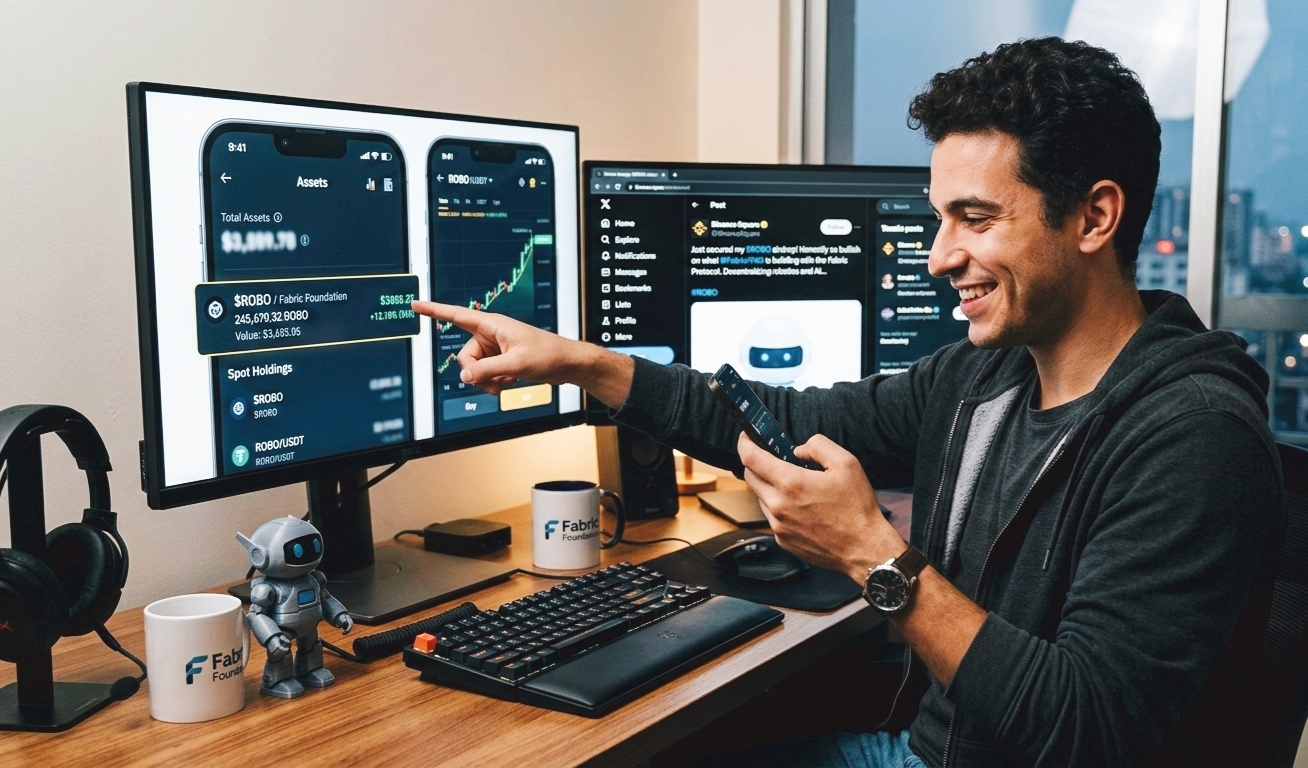
It’s easy to get caught up in the purely digital side of crypto—the DeFi loops, the NFT drops, and the meme coin frenzies. But when I look at the project @FabricFND is building, I’m reminded of what blockchain was actually designed to do: create trust between entities that don’t naturally trust each other. In this case, those entities aren't just humans; they are autonomous robots.
This brings me to my original observation about $ROBO. The real breakthrough here isn't just "Web3 for robots." It’s the necessary final piece of the automation puzzle. Currently, a robot owned by Company A cannot autonomously pay a robot owned by Company B for spare parts or energy without a central bank intermediary. That intermediary slows everything down.
By using the #ROBO token as the settlement currency on the Fabric network, these machines are becoming independent economic actors. They get their own identities, their own wallets, and their own reputation scores backed by staked collateral. We are moving from a world where we own machines that perform tasks, to a world where we participate in an economy alongside machines that perform work.
If the DePIN (Decentralized Physical Infrastructure Network) narrative holds, the network that establishes the standard machine-to-machine payment protocol will capture immense value. It’s an infrastructure play that feels less like trading tokens and more like investing in the plumbing of a futuristic society. @Fabric Foundation