
In the frantic gold rush of 2024 and 2025, the defining challenge of Artificial Intelligence was simple: scale. Generative AI had to get bigger, faster, and smarter. Now, in early 2026, we are facing the aftermath—the massive "Trust Crisis."
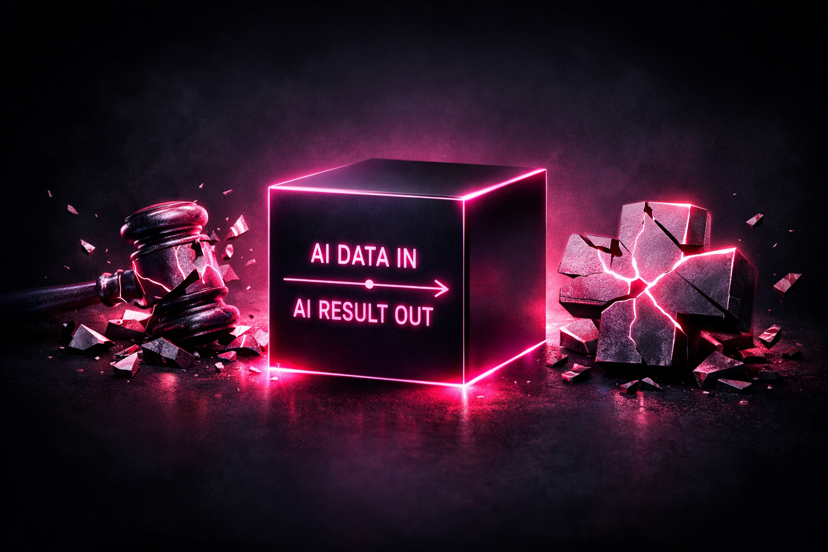
While LLMs (Large Language Models) have achieved incredible reasoning capabilities, they have remained functionally opqaue "black boxes." When an AI recommends a course of treatment for a medical patient, or creates a synthetic financial forecast, there is no inherent "audit trail" that allows us to trust that output.
This is the existential threat that Mira Network $MIRA addresses. It is not building another AI; it is building the decentralized, cryptographically verified infrastructure that allows AI models to become audit-ready and trustworthy for enterprise adoption.
Proof-of-Verification: Building the "Auditor Network"
The core innovation of Mira is its Proof-of-Verification (PoV) protocol. This isn't just an observation layer; it’s an active auditing mechanism.
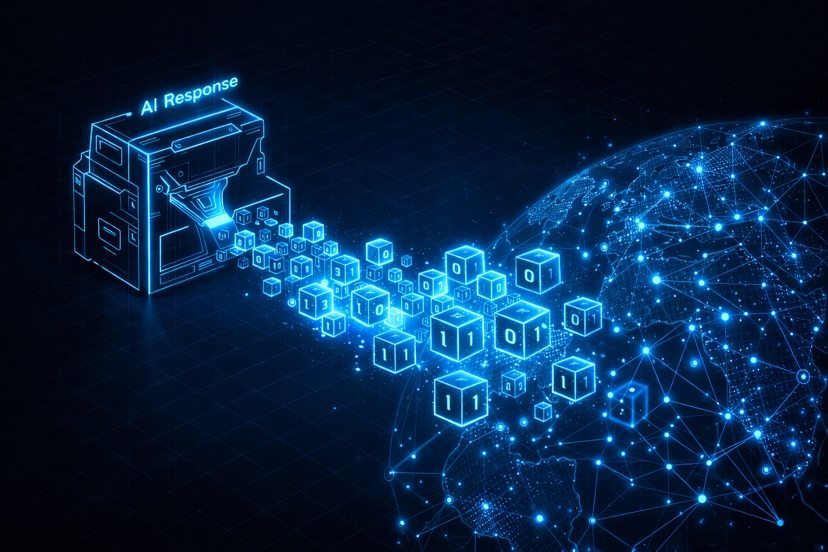
To achieve this, Mira introduces a revolutionary concept called Claim Binarization. When an AI (the "Prover") generates any output, the Mira SDK splits that response into discrete, binary "atomic claims." A paragraph that states "Paris is the capital of France, and it has 20 districts" is broken into two verified units: 1. Paris=Capital(France), and 2. Districts(Paris)=20.
These atomic claims are then randomly dispersed across a decentralized, global mesh of independent "Auditor Nodes." By breaking the context into tiny fragments, Mira preserves data privacy (no single node sees the full document) while ensuring high-stakes outputs receive granular, semantic verification. The days of accepting AI results on pure faith are over.
MIRA Tokenomics: Turning Truth into an Economic Inelastic Good
For any decentralized protocol to scale, its underlying token economics must create inelastic demand. The $MIRA token is the singular fuel that powers this "Truth Pipeline."
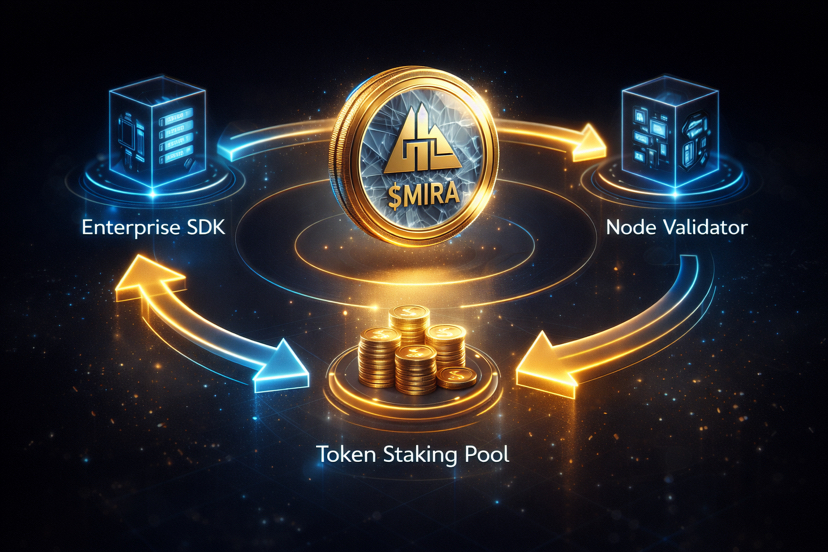
The MIRA token model creates a functional and economic circuit:
• The Demand Side: Enterprises, healthcare institutions, and legal tech companies must hold and spend MIRA token to integrate the verification SDK. It is the cost of compliance and accuracy for automated workflows.
• The Supply Side: Nodes (Auditors) are required to stake a minimum amount of $MIRA. This stake acts as a fidelity bond, ensuring their alignment. When nodes successfully verify claims and reach consensus, they earn a portion of the network fees paid in $MIRA.
This structure transforms "Truth" into a commodity with a tangible economic value. Honest verification is rewarded; "lazy" consensus or malicious actors face severe economic consequences via slashing, making the pursuit of truth the most profitable action in the network.
Real-World Traction: Klok, Learnrite, and the RWA Bridge
The most compelling aspect of Mira Network in early 2026 is its translation from technical architecture to real-world deployment. The protocol has successfully identified high-stakes verticals where "mostly correct" AI is not an option.
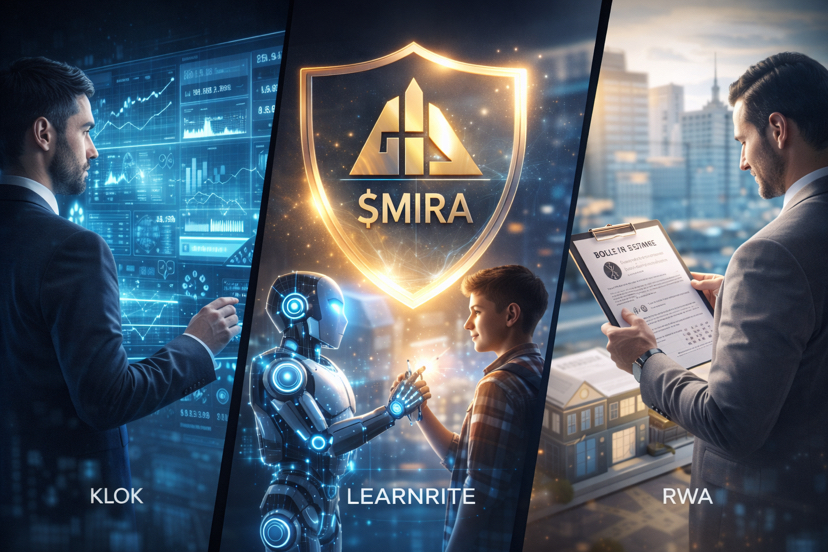
One flagship integration is Klok, a crypto intelligence platform that handles massive volumes of synthetic on-chain data summaries. In this sector, a single, confidence-instilling factual error can result in massive capital loss. Klok uses the Mira verification layer to ensure that all financial summaries and risk assessments are audit-ready for its institutional clients.
Further validation has come from Learnrite, an educational AI tutor that used Mira's SDK to elevate its answer accuracy from a baseline of 75% to 96%. This performance boost in the educational sector is a blueprint for scaling reliable AI beyond the tech world.
Looking ahead, Mira is now moving into the Real-World Asset (RWA) space. With its new MIRA-20 standard, the network is creating verified audit trails for tokenized real estate and debt instruments, allowing automated, AI-driven compliance checks on multi-billion dollar asset classes.
Conclusion: The Long-Term "Trust-Layer" Play
The "AI + Crypto" narrative in early 2026 has finally matured. The market has shifted its focus from purely generative models to the vital infrastructure that connects AI with enterprise reliability. Just as Chainlink became the inescapable "Oracle Problem" solution for on-chain price data, @Mira - Trust Layer of AI Network is positioning itself as the inescapable solution for "The Truth Problem" of automated intelligence.
With a circulating supply around 238M and a current market cap of approximately $20M, the gap between its technical utility and market valuation presents one of the most compelling opportunities in the decentralized AI sector. Mira is not just an altcoin; it is the fundamental audit layer for an AI-driven economy.