The market has this reflex now. Every time a new L1 launches with SVM compatibility and big venture checks, Twitter starts sharpening the knives. Another Solana killer. Another ghost chain pre sold to VCs who will dump on while the Discord goes quiet. We've seen this movie. We know how it ends.
But Fogo is not that movie. And if you dismiss it as just another fork chasing Solana's crumbs, you're going to miss something genuinely strange happening under the hood.
I spent the last week digging through their litepaper, their testnet data, their validator architecture, and the economic assumptions most people are glossing over. What I found is either the dumbest bet on centralized hardware the industry has ever made or the most surgical strike against Ethereum's rollup-centric future. Maybe both.
Here is what everyone gets wrong about Fogo.
The single client argument is not about performance. It's about capture.
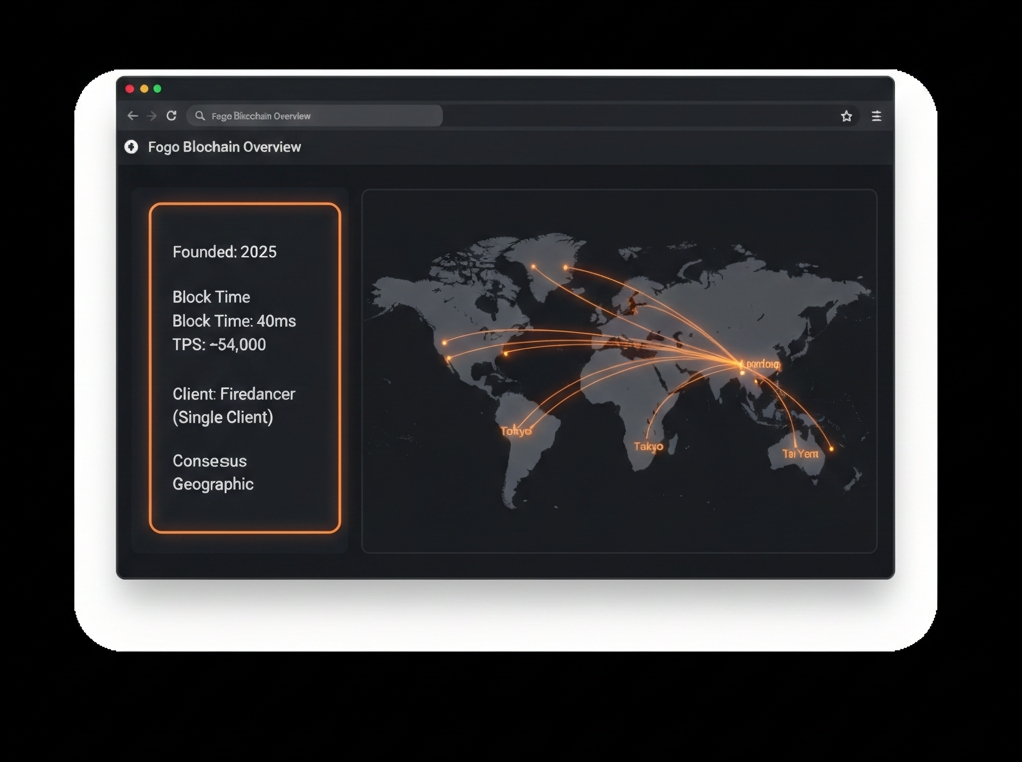
Everyone leads with the speed. 40 millisecond block times. 54,000 transactions per second. Firedancer client. We get it. Fast blockchain fast. But that's not the interesting part. The interesting part is that Fogo is launching with exactly one client and they are never adding another.
In crypto, we worship client diversity like it's a religious commandment. Ethereum has multiple clients to prevent a consensus bug from taking down the whole network. Solana is moving toward multiple clients for the same reason. Diversity is resilience. This is accepted wisdom.
Fogo looked at that wisdom and said what if resilience is overrated and performance is everything.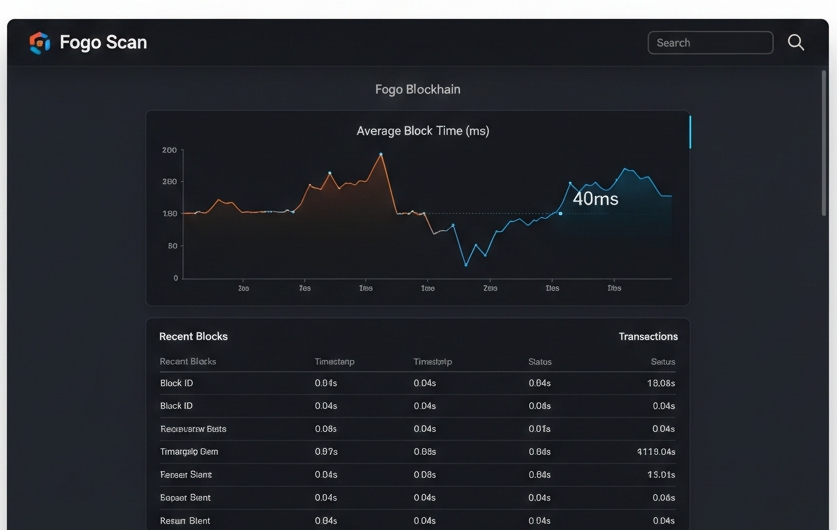
This is not engineering naivety. This is economic realism. When you run multiple clients, your network speed is determined by the slowest client. Always. You cannot opt out of this physics. If you have one client that processes blocks in 100 milliseconds and another that takes 500 milliseconds, your network settles at 500 milliseconds. The fast client waits for the slow one. Every time.
$FOGO is making a bet that the market will pay a premium for speed so extreme that it justifies a new kind of risk. Single client risk. If Firedancer has a bug, the network stops. Full stop. No fallback. No other client to catch the blocks. This sounds insane until you realize that centralized exchanges have operated this way forever and they process more volume than most L1s.
The question is not whether single client is safer. It isn't. The question is whether the speed premium is large enough to attract users who would otherwise trade on Binance or Coinbase. Fogo is not trying to beat Solana at being Solana. They are trying to beat Nasdaq at being Nasdaq.
This is the frame nobody is using.
The geographic consensus game is weirder than it looks.
Here is where Fogo actually gets clever in a way that most analysts will miss because they don't stare at latency maps for fun.
They call it follow the sun consensus. The validator set is partitioned into geographic regions. During Tokyo business hours, the Tokyo region leads consensus. During London hours, Europe takes over. During New York hours, the US region leads.
On the surface this sounds like a centralized disaster. But dig into the actual mechanism and something else emerges. They are not rotating authority based on time zones arbitrarily. They are rotating based on where the most economic activity is happening in real time.
Think about what this does to latency. If you are a trader in London during London hours, your transaction does not need to travel to Singapore for confirmation. It stays local. The consensus happens in your region. Your trade settles in the time it takes light to travel a few hundred miles instead of halfway around the planet.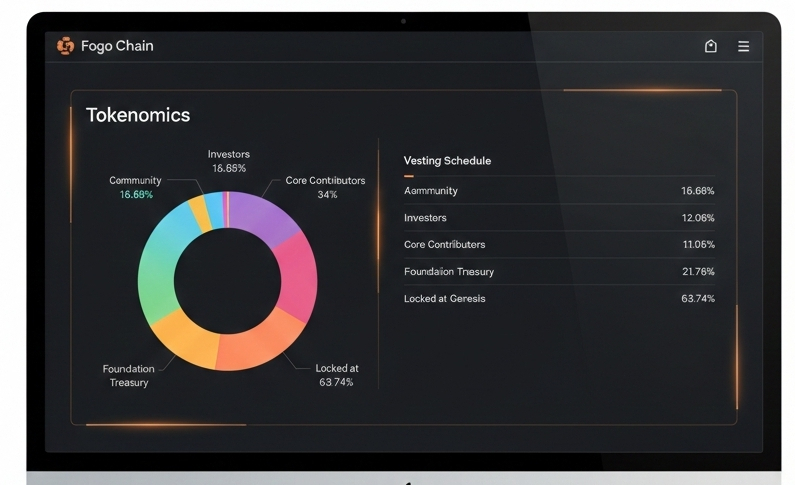
This is the kind of optimization that only matters if you care about latency arbitrage. And Fogo is explicitly building for traders who care about latency arbitrage. They are not hiding this. They are not pretending to be a general purpose L1 for NFT mints and gaming. They are building a chain where high frequency traders can front run each other in the same block and they are proud of it.
Most crypto people will read this and call it centralization. They are not wrong in the technical sense. But they are missing the market reality. The liquidity that matters for institutional trading already lives on centralized servers. It lives on AWS. It lives in data centers in New Jersey and London and Tokyo. Fogo is not inventing a new architecture. They are admitting that decentralized maximalism lost and the only way to win is to build something that integrates with the existing financial plumbing instead of pretending it doesn't exist.
The token distribution tells you who they are actually selling to.
I pulled the allocation numbers because this is where projects usually reveal their real intentions.
Total supply ten billion. Community ownership at sixteen point six eight percent. That is not high by recent standards. But look closer at what counts as community. Sixteen percent includes the Echo fundraising, the Binance launchpad, and the airdrop. This is not retail scraped from Discord. This is coordinated community capital from people who know how to play this game.
Core contributors get thirty four percent with four year linear unlocks and a twelve month cliff. This is standard but the cliff matters. Nobody on the team gets a single token for a full year. That means the people building this thing eat their own cooking for twelve months before they can sell anything. In an industry where teams often dump on mainnet day one, this signals something. Not everything. But something.
Foundation treasury at twenty one point seven six percent. This is where ecosystem grants come from. This is where liquidity incentives come from. This is the war chest. The question is whether they deploy it intelligently or burn it on short term激励 that evaporates the moment the incentives stop.
Investors at twelve point zero six percent. This is actually low compared to most L1 launches. Usually you see twenty five to thirty percent going to VCs who then spend the next three years exiting to retail. Twelve percent suggests they either raised less money or they raised it on better terms. Either way it means less sell pressure from locked investors downstream.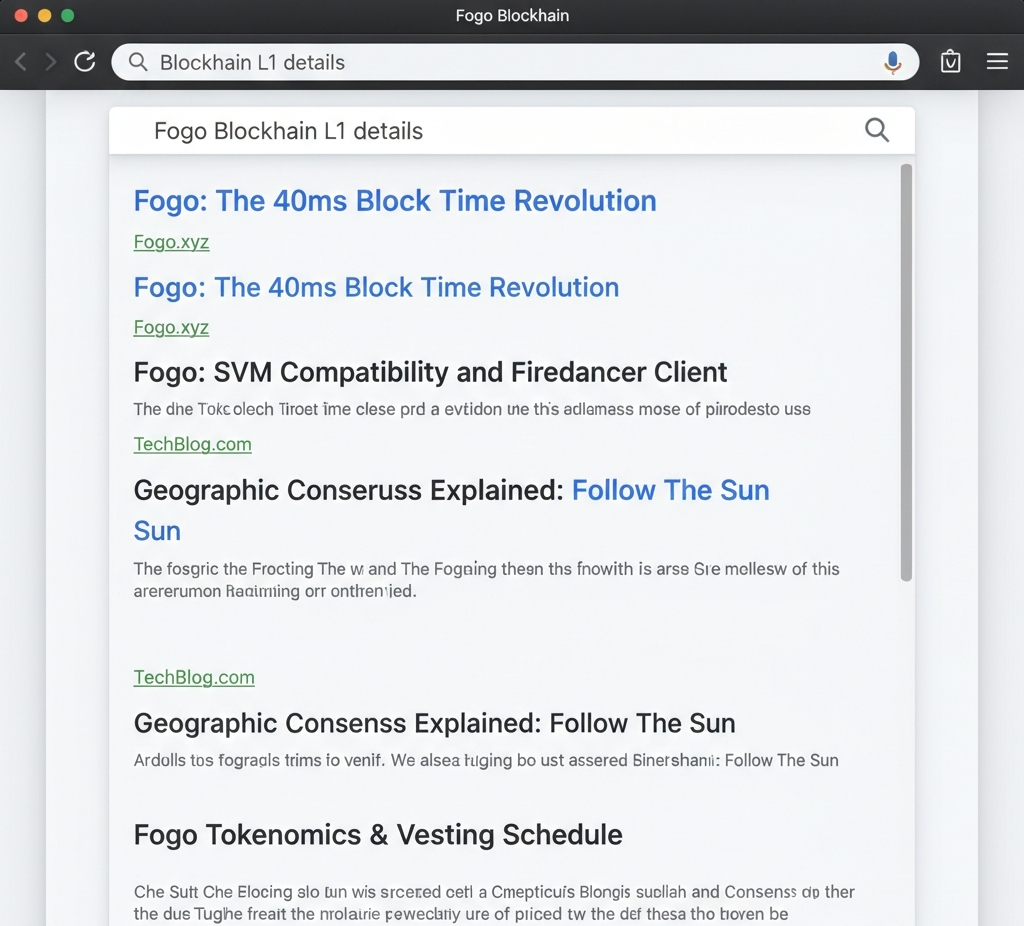
The locked at genesis number is sixty three point seven four percent. That means on day one, more than half the supply is not tradable. This is how you avoid the dumpster fire chart that most new L1s print in their first month. Whether it holds depends entirely on whether anyone actually wants to use the chain.
Here is the real question nobody is asking.
Why would a trader use Fogo instead of just trading on a CEX where latency is even lower?
This is the existential question and Fogo's answer is interesting. They are betting on composability plus speed. On Binance, you can trade fast but you cannot trade against on chain liquidity in the same transaction. You cannot arbitrage against a lending protocol in the same block. You cannot execute complex strategies that span multiple protocols without leaving the exchange.
On Fogo, if Ambient is truly an enshrined DEX with deep liquidity and you can trade against it in forty milliseconds while also accessing lending markets and derivatives in the same atomic unit, you start to get something that CEXs cannot offer. Speed plus programmability.
The question is whether the liquidity arrives. Chains are worthless without liquidity. Liquidity follows users. Users follow applications. Applications follow incentives. This is the bootstrap problem every L1 faces and most fail at.
Fogo's hedge is the Pyth integration. Pyth already has institutional data feeds. If they can bring that data on chain with low latency and high reliability, traders have a reason to at least look at the chain. From there it becomes about whether the execution environment actually delivers on the latency promises.
The market signal to watch is not price. It is block times.
If Fogo launches and block times drift above one hundred milliseconds within the first month, the entire thesis collapses. The whole value prop is speed. If they cannot deliver consistent forty millisecond blocks under real world load, the chain is just another SVM fork with a marketing budget.
I will be watching the block explorer like a hawk in January. Not for transactions per second. For variance. The worst block time tells you more than the average. If the worst block time stays under one hundred milliseconds, they might actually have something. If it spikes to five hundred or a thousand, the geographic consensus game is failing and the single client bet is not paying off.
The macro angle here is bigger than $FOGO .
We are entering a phase where L1s stop pretending to be for everything and start specializing. Ethereum is for settlement and L2s. Solana is for retail apps and memecoin mania. Fogo is for trading. This specialization is healthy. It means the industry is maturing. It means we stop expecting one chain to do everything and start building chains that optimize for specific use cases.
The risk is that specialized chains become silos. If Fogo is only for trading, what happens when you want to take your profits and buy an NFT on Solana? You bridge. And bridging is where value leaks and user experience dies. If Fogo does not solve the bridging problem with something better than what exists today, they become an island. Islands die.
The counter argument is that trading volume is sticky. If you capture the high frequency traders, they will bring liquidity and liquidity attracts more traders and eventually applications come to where the liquidity lives. This is the flywheel every exchange understands. Binance started with trading and now has an entire ecosystem. Fogo is trying the same play but on chain.
I am not convinced they pull it off. The odds are against any new L1. But I am convinced they are trying something that is not just another copy paste job with a different token name. The single client bet is bold. The geographic consensus is interesting. The focus on latency as the only metric that matters is honest in a way most chains are not.Most chains tell you they care about speed while building for maximum decentralization. Fogo tells you they care about speed and decentralization can wait. This honesty is refreshing even if it is dangerous.
If you trade on chain and you care about milliseconds, you should have Fogo on your radar. Not because it will replace Solana. But because it might become the place where the fastest traders go to play and if that happens, the liquidity will follow and then the applications will follow and then suddenly you have a real ecosystem.
Or it dies in six months when the incentives run out and everyone goes back to trading on Binance.
That is the nature of this market. Most things die. The ones that don't become the infrastructure for the next cycle.
Fogo is worth watching not because it will definitely succeed but because it is making a bet that is different from everyone else. Different bets create asymmetric outcomes. Asymmetric outcomes create millionaires and bagholders. Pick your side carefully.