A few nights ago, I was sitting with my family after dinner, talking about how money moves in today’s digital world. The conversation drifted from traditional banking to digital assets and someone casually asked, “Why do some coins always seem active while others just fade away?”
That simple question stayed with me. It wasn’t about hype or headlines. It was about why liquidity, real, moving capital, chooses certain networks over others. That’s when I brought up Fogo Coin.
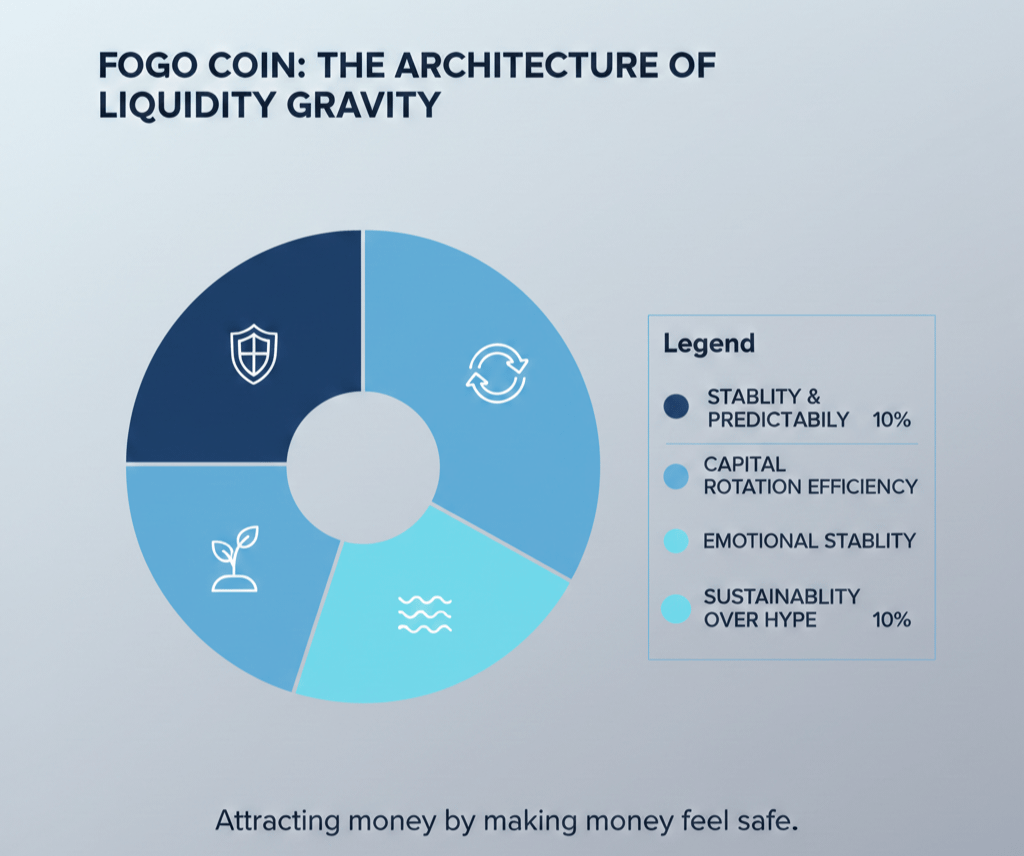
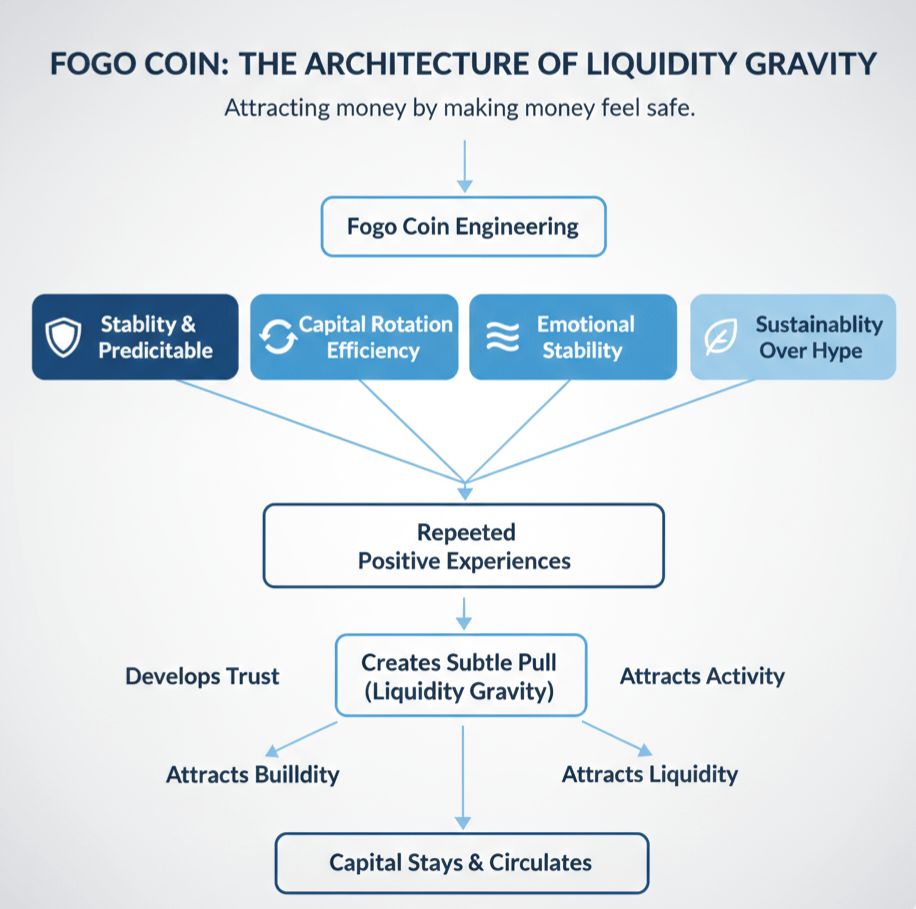
I told them that sometimes it’s not marketing, trends, or loud communities that determine where liquidity flows. Sometimes, it’s pure engineering. The way a network is built can quietly shape whether capital feels safe staying there. That’s when I described what I like to call liquidity gravity.
Liquidity doesn’t move randomly. It behaves more like water than like excitement. It seeks stability. It pools where friction is low and predictability is high. If a network struggles during peak hours, if transactions slow down unexpectedly, or if confirmation times fluctuate without warning, liquidity becomes cautious. Traders widen spreads. Market makers reduce exposure. Capital either shrinks or leaves.
An interesting fact about Fogo Coin is that its transaction scheduling system is specifically optimized to reduce micro-congestion during high-demand periods, not just to look fast when the network is quiet. That detail matters more than most people realize. Many systems perform beautifully under light load but begin to strain when real activity hits. Fogo’s design seems to anticipate stress rather than avoid it.
In my view, designing for peak pressure instead of ideal conditions shows maturity. It signals that the builders understand real markets aren’t calm. They’re volatile, unpredictable and sometimes chaotic.
When liquidity providers evaluate a network, they care deeply about consistency. Slippage models rely on stable execution timing. If performance suddenly drops, pricing becomes distorted. That distortion increases risk. And when risk increases, liquidity becomes defensive.
I explained to my family that liquidity behaves like water settling into a basin. If the ground underneath keeps shifting, water won’t stay. But if the structure is solid, even during storms, the basin holds. Fogo Coin feels like it’s trying to reinforce that basin, especially during heavy rainfall.
Another layer that doesn’t get enough attention is capital rotation efficiency. When confirmation timing is reliable, traders can recycle their capital faster. That doesn’t mean reckless activity. It means less idle time between opportunities. Over dozens or hundreds of cycles, that saved time compounds. Efficiency becomes measurable.
From my perspective, that’s where liquidity gravity truly forms. When capital experiences fewer unexpected disruptions, it develops trust. Trust isn’t loud. It’s gradual. But once established, it creates a subtle pull. Settlement environments that consistently deliver performance begin to attract repeat participation.
There’s also a psychological side to all of this. Markets are emotional. Infrastructure failures amplify fear instantly. When a network freezes or lags during volatility, panic spreads faster than any news headline. But when systems remain stable under pressure, confidence grows quietly. Participants feel less urgency to exit. That emotional stability reduces cascading reactions.
Fogo Coin’s approach appears focused on avoiding those panic-trigger moments. Instead of chasing dramatic speed benchmarks for marketing purposes, the architecture seems oriented around stability under load. That choice influences behavior.
Liquidity gravity isn’t explosive. It doesn’t generate viral excitement overnight. It builds through repeated positive experiences. Through sessions where nothing breaks. Through surges where performance doesn’t collapse. Through periods of stress where execution remains predictable.
When I finished explaining all of this, one of my family members summarized it perfectly:
“So basically, it attracts money by making money feel safe.”
That line stuck with me.
In my view, Fogo Coin isn’t trying to create attention spikes. It’s trying to create structural comfort. And comfort in markets is powerful. It keeps spreads tighter. It keeps participants engaged. It keeps capital circulating instead of retreating.
Over time, that consistency becomes identity. Networks known for stability attract builders. Builders attract activity. Activity attracts liquidity. And liquidity, once comfortable, tends to stay.
If liquidity truly behaves like water, then engineering determines the shape of the landscape. Fogo Coin seems to be shaping its terrain carefully, not for spectacle but for sustainability.
And sometimes, sustainability is far more valuable than excitement.