
#open
open
5.1M Aufrufe
18,703 Kommentare
Hot
Zuletzt

🚨 $OPEN $SAGA $VELODROME PAIR-ENTFERNUNGSWARNUNG – VOR DER CUT‑OFF-ZEIT RAUS! 💥
📊 Binances Zeitplan, um am 11. Sep um 11:00 UTC+8 OPEN/FDUSD, SAGA/FDUSD und VELODROME/USDC aus dem Spot-Menü abzuziehen, ist ein klares Liquiditätsvakuum. 🦈 Smart‑Money‑Bots entladen bereits, daher erwarte in der kurzfristigen Phase einen Tumult bei den verbleibenden US‑Stable-Paaren.
⚡ Wer jetzt handelt, kann seine Exponierung zu tieferen Liquiditätspools umleiten oder sich vor dem Shutdown absichern. 📌 Aktualisiere oder storniere ausstehende Orders, bevor die Uhr auf null geht, um unerwartete Ausführungen zu vermeiden.
💬 Reallokierst du dein Kapital bereits oder wartest du auf den nächsten Whale‑Move? 👇
⚠️ Keine Finanzberatung. Manage immer dein Risiko. 🛡️
🏷️ #OPEN #SpotRemoval #TradingUpdate #Crypto
🚀 ⚡
📊 Binances Zeitplan, um am 11. Sep um 11:00 UTC+8 OPEN/FDUSD, SAGA/FDUSD und VELODROME/USDC aus dem Spot-Menü abzuziehen, ist ein klares Liquiditätsvakuum. 🦈 Smart‑Money‑Bots entladen bereits, daher erwarte in der kurzfristigen Phase einen Tumult bei den verbleibenden US‑Stable-Paaren.
⚡ Wer jetzt handelt, kann seine Exponierung zu tieferen Liquiditätspools umleiten oder sich vor dem Shutdown absichern. 📌 Aktualisiere oder storniere ausstehende Orders, bevor die Uhr auf null geht, um unerwartete Ausführungen zu vermeiden.
💬 Reallokierst du dein Kapital bereits oder wartest du auf den nächsten Whale‑Move? 👇
⚠️ Keine Finanzberatung. Manage immer dein Risiko. 🛡️
🏷️ #OPEN #SpotRemoval #TradingUpdate #Crypto
🚀 ⚡

Verifiziert
🚨 $OPEN , $SAGA & $VELODROME SPOT-PAARE verschwinden am 11. SEPTEMBER! ⚠️
📊 Die erstklassige Börse stoppt den Handel mit $OPEN /FDUSD, $SAGA /FDUSD und $VELODROME /USDC um 03:00 UTC. 🦈 Das Smart‑Money wird umgeleitet, während Liquiditätspools verdampfen—daher riskieren alle noch offenen Limitaufträge, „festzustecken“. 📌 Räumen Sie jetzt Ihre Bücher auf; die Tokens selbst bleiben aktiv, nur die Paarungen werden eingestellt. 🔍 Frühzeitige Ordnung verhindert eine unerwartete Short-Squeeze‑Situation, wenn die Uhr schlägt.
💬 Haben Sie Ihre ausstehenden Orders vor der Frist gelöscht? 👇
⚠️ Keine Finanzberatung. Verwenden Sie immer ein Risikomanagement. 🛡️
🏷️ #OPEN #SAGA #VELODROME #SpotRemoval #Liquidity
🦈 🚀
📊 Die erstklassige Börse stoppt den Handel mit $OPEN /FDUSD, $SAGA /FDUSD und $VELODROME /USDC um 03:00 UTC. 🦈 Das Smart‑Money wird umgeleitet, während Liquiditätspools verdampfen—daher riskieren alle noch offenen Limitaufträge, „festzustecken“. 📌 Räumen Sie jetzt Ihre Bücher auf; die Tokens selbst bleiben aktiv, nur die Paarungen werden eingestellt. 🔍 Frühzeitige Ordnung verhindert eine unerwartete Short-Squeeze‑Situation, wenn die Uhr schlägt.
💬 Haben Sie Ihre ausstehenden Orders vor der Frist gelöscht? 👇
⚠️ Keine Finanzberatung. Verwenden Sie immer ein Risikomanagement. 🛡️
🏷️ #OPEN #SAGA #VELODROME #SpotRemoval #Liquidity
🦈 🚀


🚨 $OPEN $SAGA $VELO PAIR DELISTING ALERT – ENDET UM 11:00 UTC+8 🦈
Die bevorstehende Entfernung von $OPEN /FDUSD, $SAGA /FDUSD und $VELO /USDC am 11. Sep. deutet auf einen strategischen Liquiditätssweep durch die Plattform hin: Dabei werden unter‑liquidierte Kontrakte ausgemustert, noch bevor der nächste Gebührenzyklus beginnt. 🦈
Smart Money wird das Kapital wahrscheinlich in höher frequentierte Korridore umschichten, und das plötzliche Bot‑Shutdown schafft ein kurzfristiges Order‑Flow‑Vakuum, das Mikro‑Spikes in benachbarten Paaren auslösen kann. 📊 Behalte die Orderbuch‑Tiefe an der Top‑Börse im Blick, während die Zeit abläuft. 💬 Wie passt du deine Exponierung vor dem Delisting an? 👇
⚠️ Keine Finanzberatung. Risikomanagement ist immer wichtig. 🛡️
🏷️ #OPEN #Delisting #Spot #Crypto
🚀 🦈
Die bevorstehende Entfernung von $OPEN /FDUSD, $SAGA /FDUSD und $VELO /USDC am 11. Sep. deutet auf einen strategischen Liquiditätssweep durch die Plattform hin: Dabei werden unter‑liquidierte Kontrakte ausgemustert, noch bevor der nächste Gebührenzyklus beginnt. 🦈
Smart Money wird das Kapital wahrscheinlich in höher frequentierte Korridore umschichten, und das plötzliche Bot‑Shutdown schafft ein kurzfristiges Order‑Flow‑Vakuum, das Mikro‑Spikes in benachbarten Paaren auslösen kann. 📊 Behalte die Orderbuch‑Tiefe an der Top‑Börse im Blick, während die Zeit abläuft. 💬 Wie passt du deine Exponierung vor dem Delisting an? 👇
⚠️ Keine Finanzberatung. Risikomanagement ist immer wichtig. 🛡️
🏷️ #OPEN #Delisting #Spot #Crypto
🚀 🦈

Verifiziert
📰 Binance veröffentlicht gerade eine Mitteilung: Basierend auf den jüngsten Prüfungsergebnissen werden am 11. September um 11:00 Uhr (UTC+8) die drei Spot-Handelspaare OPEN/FDUSD, SAGA/FDUSD und VELODROME/USDC entfernt und der dazugehörige Handel wird eingestellt.
🔥 Bitte versteht „Handelspaare entfernen“ nicht sofort als „Token aus dem Handel nehmen“. In dieser Mitteilung geht es um drei ausdrücklich genannte Handelspaare, die jeweils die Kursmärkte FDUSD und USDC betreffen. Also: Nicht vorschnell reagieren und den ganzen Coin direkt verkaufen, nur weil man die Nachricht gesehen hat.
⚠️ Gleichzeitig werden auch die Spot-Trading-Bot-Services, die diesen Handelspaaren entsprechen, beendet. Nutzer, die gerade einen Grid-Bot oder andere Spot-Bots laufen haben, sollten am besten vorher die Einstellungen überprüfen und diese aktualisieren oder stoppen, damit man nicht erst zur Stilllegungszeit merkt, dass die Strategie nicht mehr weiter ausgeführt werden kann.
💡 Ganz ehrlich: Der häufigste Nachteil bei solchen Ankündigungen entsteht nicht dadurch, dass man sie übersieht, sondern dass man nur kurz die Überschrift überfliegt und es falsch einordnet. Da bis zur offiziellen Entfernung noch Zeit ist, erst einmal prüfen: Haltet ihr wirklich die betroffenen Token oder nutzt ihr gerade die konkreten Handelspaare aus der Mitteilung.
🤔 Läuft bei euch gerade ein Spot-Trading-Bot in Bezug auf OPEN, SAGA oder VELODROME?
#币安 #OPEN #SAGA #VELODROME
🔥 Bitte versteht „Handelspaare entfernen“ nicht sofort als „Token aus dem Handel nehmen“. In dieser Mitteilung geht es um drei ausdrücklich genannte Handelspaare, die jeweils die Kursmärkte FDUSD und USDC betreffen. Also: Nicht vorschnell reagieren und den ganzen Coin direkt verkaufen, nur weil man die Nachricht gesehen hat.
⚠️ Gleichzeitig werden auch die Spot-Trading-Bot-Services, die diesen Handelspaaren entsprechen, beendet. Nutzer, die gerade einen Grid-Bot oder andere Spot-Bots laufen haben, sollten am besten vorher die Einstellungen überprüfen und diese aktualisieren oder stoppen, damit man nicht erst zur Stilllegungszeit merkt, dass die Strategie nicht mehr weiter ausgeführt werden kann.
💡 Ganz ehrlich: Der häufigste Nachteil bei solchen Ankündigungen entsteht nicht dadurch, dass man sie übersieht, sondern dass man nur kurz die Überschrift überfliegt und es falsch einordnet. Da bis zur offiziellen Entfernung noch Zeit ist, erst einmal prüfen: Haltet ihr wirklich die betroffenen Token oder nutzt ihr gerade die konkreten Handelspaare aus der Mitteilung.
🤔 Läuft bei euch gerade ein Spot-Trading-Bot in Bezug auf OPEN, SAGA oder VELODROME?
#币安 #OPEN #SAGA #VELODROME


$LIT Halbe Stunde Nettokauf 902万, Volumen auf das 4,4-Fache erhöht
$OPEN 24H Umsatz 220万, kleine Marktkapitalisierung mit starken Schwankungen, mit geringem Einsatz behandeln
💰 LIT 4.4325 eher bärisch
🟢 über 4.4503 halten
Ziele 4.5571 / 4.6105 / 4.6639
Stop-Loss 4.3791
🔴 unter 4.4147 fallen
nach unten schauen auf 4.3079
🎯 Der große Akteur hat mit einem großen Market-Sell-Off einen fortgesetzten Abwärtsdruck von 5 aufeinanderfolgenden Market-Orders ausgelöst; das Volumen in einer halben Stunde ist 4,4-mal höher und das Verhältnis von aktiven zu passiven Trades liegt bei 0,96, was den Markt unter Druck setzt. Der bärische Trend ist deutlich, es fehlt noch das echte Signal, dass das Long/Short-Verhältnis der Großanleger unter 4.4147 fällt und der Nettozufluss in einer halben Stunde von positiv auf negativ wechselt, um dies vollständig zu bestätigen.
━━━━━━━━━
💰 OPEN 0.1270 eher bullisch
🟢 über 0.1276 halten
Ziele 0.1312 / 0.1330 / 0.1348
Stop-Loss 0.1252
🔴 unter 0.1264 fallen
nach unten schauen auf 0.1228
🎯 Das Volumen in einer halben Stunde ist ungewöhnlich stark auf das 6,2-Fache gestiegen und das Verhältnis aktiver Trades erreicht 1,38; das Long/Short-Verhältnis der Großanleger liegt bei 2,22 auf hohem Niveau, die bullische Dynamik ist stark. Es fehlt noch ein echtes Signal von einer weiteren deutlichen Zunahme der Positionen und einem signifikanten Anstieg des Nettozuflusses in einer halben Stunde, um dies zu bestätigen.
—
🕒 Die Daten stammen vom 09-07 03:34 (UTC+8) aus den Binance-Futures-Kursen, können selbst überprüft werden
Objektive Datendarstellung, keine Anlageberatung, bitte Risiken beachten.
#LIT #OPEN
$OPEN 24H Umsatz 220万, kleine Marktkapitalisierung mit starken Schwankungen, mit geringem Einsatz behandeln
💰 LIT 4.4325 eher bärisch
🟢 über 4.4503 halten
Ziele 4.5571 / 4.6105 / 4.6639
Stop-Loss 4.3791
🔴 unter 4.4147 fallen
nach unten schauen auf 4.3079
🎯 Der große Akteur hat mit einem großen Market-Sell-Off einen fortgesetzten Abwärtsdruck von 5 aufeinanderfolgenden Market-Orders ausgelöst; das Volumen in einer halben Stunde ist 4,4-mal höher und das Verhältnis von aktiven zu passiven Trades liegt bei 0,96, was den Markt unter Druck setzt. Der bärische Trend ist deutlich, es fehlt noch das echte Signal, dass das Long/Short-Verhältnis der Großanleger unter 4.4147 fällt und der Nettozufluss in einer halben Stunde von positiv auf negativ wechselt, um dies vollständig zu bestätigen.
━━━━━━━━━
💰 OPEN 0.1270 eher bullisch
🟢 über 0.1276 halten
Ziele 0.1312 / 0.1330 / 0.1348
Stop-Loss 0.1252
🔴 unter 0.1264 fallen
nach unten schauen auf 0.1228
🎯 Das Volumen in einer halben Stunde ist ungewöhnlich stark auf das 6,2-Fache gestiegen und das Verhältnis aktiver Trades erreicht 1,38; das Long/Short-Verhältnis der Großanleger liegt bei 2,22 auf hohem Niveau, die bullische Dynamik ist stark. Es fehlt noch ein echtes Signal von einer weiteren deutlichen Zunahme der Positionen und einem signifikanten Anstieg des Nettozuflusses in einer halben Stunde, um dies zu bestätigen.
—
🕒 Die Daten stammen vom 09-07 03:34 (UTC+8) aus den Binance-Futures-Kursen, können selbst überprüft werden
Objektive Datendarstellung, keine Anlageberatung, bitte Risiken beachten.
#LIT #OPEN

Im Namen Allahs, des Allerbarmers, des Barmherzigen
Friede sei mit euch und Gottes Barmherzigkeit und Segen
📊 SPOT-TRADE-UPDATE & TECHNISCHE ANALYSE: $OPEN / USDT
🔍 Vermögens- & Marktfaktoren
Scharia-Status: Halal / Scharia-konform (Utility Token: Dezentralisierte KI-Infrastruktur & Datenattributionsprotokoll)
Netzwerk-Nutzen: OpenLedger ($OPEN ) betreibt eine auf KI ausgerichtete Layer-1/Layer-2-Blockchain, die für überprüfbare Datenzuordnung, Modelltraining, Gas-Abwicklung und die dezentrale Ausführung von KI-Knoten ohne zinstragende (Riba) Mechanismen entwickelt wurde.
Makro- & Liquiditätstreiber: Bewertungstrends werden weiterhin durch die laufende Kapitalrotation in Dezentrale Physische Infrastruktur (DePIN) und KI-Altcoins, die breitere Liquidität des Kryptomarktes sowie Entwicklungen in der makroökonomischen Politik der Federal Reserve bestimmt.
📉 Technischer Überblick
Der Preis hält die Konsolidierungsunterstützung bei etwa 0.1252 nach einer früheren Akkumulationsphase.
15m / 1H Charts: Der Preis hält sich stabil nahe dem 1H MA99 ($0.1261), mit einem 15m RSI um 44.80 und einem 1H RSI, der neutral bei 52.32 bleibt.
4H / Tages-Charts: Der Preis zeigt eine Bodenbildungsstruktur oberhalb des 4H MA25 ($0.1216), mit einem 4H RSI bei 43.34 und einem Daily RSI, der sich von überverkauftem Gebiet bei 38.70 erholt.
🎯 SPOT-TRADE-SETUP
Asset: $OPEN / USDT | Typ: Spot-Setup
📍 Einstiegszone: 0.1220 – 0.1255
🎯 TP1: 0.1350
🎯 TP2: 0.1460
🎯 TP3: 0.1600
⛔ Stop-Loss (SL): 0.1140
⚠️ RISIKOMANAGEMENT
Ausführung: Ausschließlich Spot-Handel.
Allokation: Maximal 5% des gesamten Handelskapitals pro Positions-Einstieg zuweisen.
#OPEN #OpenLedger #CryptoAnalysis #SpotTrading #HalalCrypto
Friede sei mit euch und Gottes Barmherzigkeit und Segen
📊 SPOT-TRADE-UPDATE & TECHNISCHE ANALYSE: $OPEN / USDT
🔍 Vermögens- & Marktfaktoren
Scharia-Status: Halal / Scharia-konform (Utility Token: Dezentralisierte KI-Infrastruktur & Datenattributionsprotokoll)
Netzwerk-Nutzen: OpenLedger ($OPEN ) betreibt eine auf KI ausgerichtete Layer-1/Layer-2-Blockchain, die für überprüfbare Datenzuordnung, Modelltraining, Gas-Abwicklung und die dezentrale Ausführung von KI-Knoten ohne zinstragende (Riba) Mechanismen entwickelt wurde.
Makro- & Liquiditätstreiber: Bewertungstrends werden weiterhin durch die laufende Kapitalrotation in Dezentrale Physische Infrastruktur (DePIN) und KI-Altcoins, die breitere Liquidität des Kryptomarktes sowie Entwicklungen in der makroökonomischen Politik der Federal Reserve bestimmt.
📉 Technischer Überblick
Der Preis hält die Konsolidierungsunterstützung bei etwa 0.1252 nach einer früheren Akkumulationsphase.
15m / 1H Charts: Der Preis hält sich stabil nahe dem 1H MA99 ($0.1261), mit einem 15m RSI um 44.80 und einem 1H RSI, der neutral bei 52.32 bleibt.
4H / Tages-Charts: Der Preis zeigt eine Bodenbildungsstruktur oberhalb des 4H MA25 ($0.1216), mit einem 4H RSI bei 43.34 und einem Daily RSI, der sich von überverkauftem Gebiet bei 38.70 erholt.
🎯 SPOT-TRADE-SETUP
Asset: $OPEN / USDT | Typ: Spot-Setup
📍 Einstiegszone: 0.1220 – 0.1255
🎯 TP1: 0.1350
🎯 TP2: 0.1460
🎯 TP3: 0.1600
⛔ Stop-Loss (SL): 0.1140
⚠️ RISIKOMANAGEMENT
Ausführung: Ausschließlich Spot-Handel.
Allokation: Maximal 5% des gesamten Handelskapitals pro Positions-Einstieg zuweisen.
#OPEN #OpenLedger #CryptoAnalysis #SpotTrading #HalalCrypto
Open ( $OPN ) zeigt robuste Unterstützung durch Order-Block, da die SMC-Analyse eine starke bullische Dynamik bestätigt. Beam ( $BEAM ) erweitert sein Ökosystem und fördert damit Adoption und Liquidität, während Banana ( $BANANA ) hohe Handelsaktivität und Spitzen im Anleger-Sentiment liefert. Alarm 🚨. Der Markt wird verrückt werden. 🚀📈 #Open #Beam #Banana #CryptoTrading #BinanceSquare
🛡️ $OPEN DIE ERZÄHLUNG NIMMT FAHRT AUF, ALS OPENAI DAS AUTONOME GPT-6-ASTRA-MODELL VORSTELLT
OpenAI hat gerade GPT-6 Astra ausgerollt, das nativ über Tabellenkalkulationen, Codebasen und komplexe Software-Workflows hinweg mit echter Autonomie arbeitet. Das Überschreiten der Schwelle zur Cybersicherheitsfähigkeit zeigt, dass KI-gesteuerte Ausführung sich in Richtung vollständiger Automatisierung auf institutionellem Niveau entwickelt.
Smart Money beobachtet, wie sich dieser Meilenstein auf den Kapitalfluss in Tech und Krypto auswirkt. Doch wenn erzählerischer Schwung auf liquide Märkte trifft, ist Disziplin entscheidend. Reduziere die Positionsgröße, um ruhig schlafen zu können, und jage KI-Sektor-Katalysatoren niemals ohne klar definierte Parameter. Kapital zuerst – Hoffnung ist keine Strategie.
⚠️ Keine Finanzberatung. Verwalte dein Risiko immer sorgfältig. 🛡️
#OPEN #ArtificialIntelligence #AINarrative #TechTrends
Schütze zuerst den Bag, den Gewinn erst danach.
OpenAI hat gerade GPT-6 Astra ausgerollt, das nativ über Tabellenkalkulationen, Codebasen und komplexe Software-Workflows hinweg mit echter Autonomie arbeitet. Das Überschreiten der Schwelle zur Cybersicherheitsfähigkeit zeigt, dass KI-gesteuerte Ausführung sich in Richtung vollständiger Automatisierung auf institutionellem Niveau entwickelt.
Smart Money beobachtet, wie sich dieser Meilenstein auf den Kapitalfluss in Tech und Krypto auswirkt. Doch wenn erzählerischer Schwung auf liquide Märkte trifft, ist Disziplin entscheidend. Reduziere die Positionsgröße, um ruhig schlafen zu können, und jage KI-Sektor-Katalysatoren niemals ohne klar definierte Parameter. Kapital zuerst – Hoffnung ist keine Strategie.
⚠️ Keine Finanzberatung. Verwalte dein Risiko immer sorgfältig. 🛡️
#OPEN #ArtificialIntelligence #AINarrative #TechTrends
Schütze zuerst den Bag, den Gewinn erst danach.

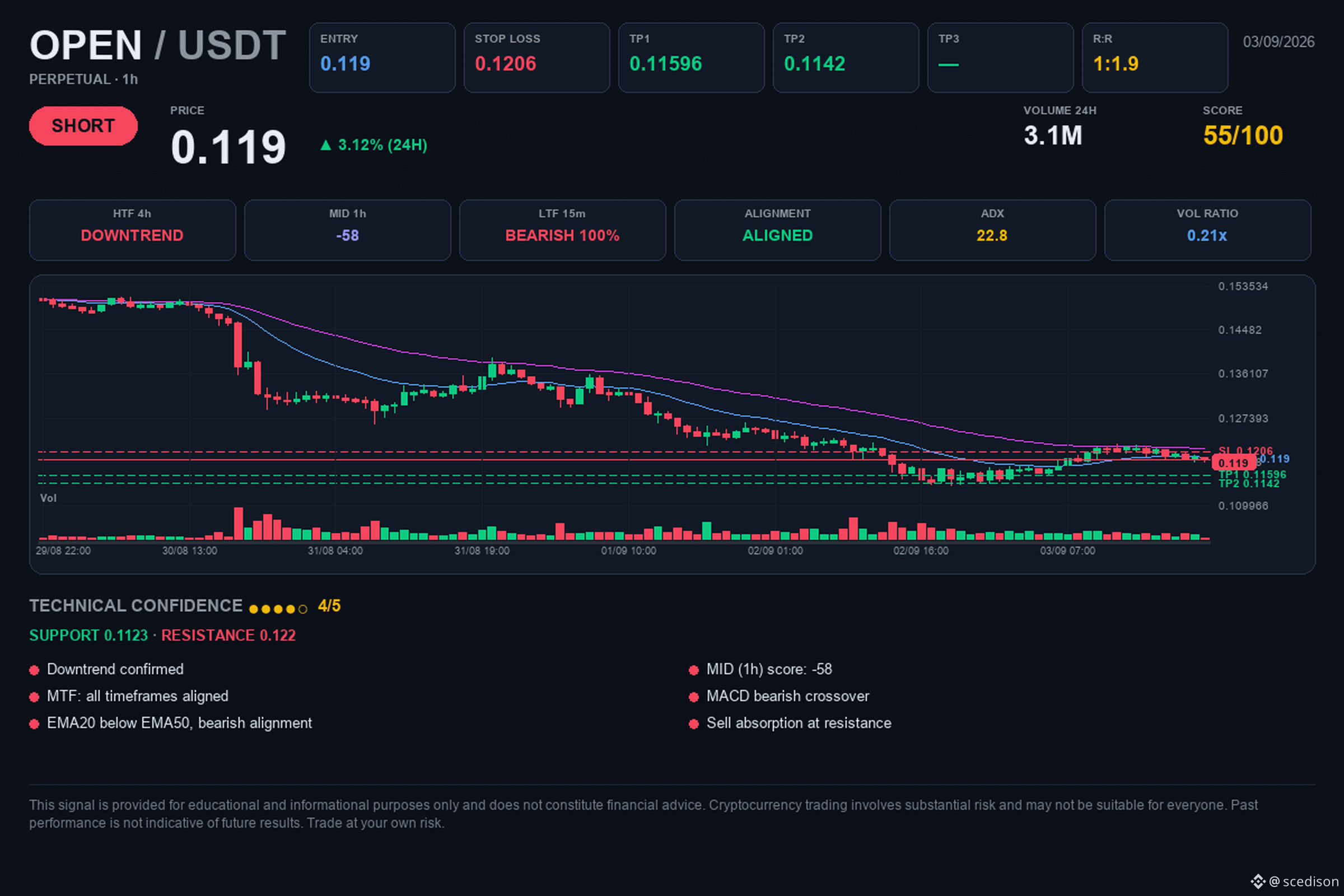
📢 $OPEN / $USDT | 🔴 SHORT | ⭐ 55.3%
🎯 Ziel: $0.11596. Fällt es weiter?
🎯 Handelsniveaus:
🟢 Einstieg: $0.119
🛑 Stop Loss: $0.1206
🏁 TP1: $0.11596
🏁 TP2: $0.1142
📉 Analyse:
Die Marktstruktur in $OPEN zeigt eine vollständige bärische Ausrichtung in den Zeiteinheiten von 4h, 1h und 15m, bestätigt durch ein Triple-Top-Muster, das frühere bullische Versuche entkräftete. Der ADX von 22.82 deutet auf einen sich entwickelnden Trend hin, während der bärische MACD-Cross (Momentum-Indikator) und die Positionierung der EMAs 20 und 50 den vorherrschenden Verkaufsdruck bestätigen.
⚖️ Risiko/Ertrag: 1:1.9
⏱️ Timeframe: 1H
📐 Technisches Vertrauen: 4/5
Das Invalidationsniveau liegt bei $0.1206 und schützt den Bereich des unmittelbaren Widerstands. Die bärische These bleibt gültig, solange der Kurs es nicht schafft, die gleitenden Durchschnitte zurückzuerobern und weiterhin die Volumenverteilung unter dem POC (Point of Control) bei $0.131722 respektiert.
Hältst du die Unterstützung bei $0.1123 für stark genug, um diesen bärischen Impuls zu stoppen?
💡 Diese Analyse dient zu Bildungszwecken und ist keine Finanzberatung. Recherchiere selbst und entscheide in Ruhe.
#crypto #OPEN #trading #Futures #Bearish
🎯 Ziel: $0.11596. Fällt es weiter?
🎯 Handelsniveaus:
🟢 Einstieg: $0.119
🛑 Stop Loss: $0.1206
🏁 TP1: $0.11596
🏁 TP2: $0.1142
📉 Analyse:
Die Marktstruktur in $OPEN zeigt eine vollständige bärische Ausrichtung in den Zeiteinheiten von 4h, 1h und 15m, bestätigt durch ein Triple-Top-Muster, das frühere bullische Versuche entkräftete. Der ADX von 22.82 deutet auf einen sich entwickelnden Trend hin, während der bärische MACD-Cross (Momentum-Indikator) und die Positionierung der EMAs 20 und 50 den vorherrschenden Verkaufsdruck bestätigen.
⚖️ Risiko/Ertrag: 1:1.9
⏱️ Timeframe: 1H
📐 Technisches Vertrauen: 4/5
Das Invalidationsniveau liegt bei $0.1206 und schützt den Bereich des unmittelbaren Widerstands. Die bärische These bleibt gültig, solange der Kurs es nicht schafft, die gleitenden Durchschnitte zurückzuerobern und weiterhin die Volumenverteilung unter dem POC (Point of Control) bei $0.131722 respektiert.
Hältst du die Unterstützung bei $0.1123 für stark genug, um diesen bärischen Impuls zu stoppen?
💡 Diese Analyse dient zu Bildungszwecken und ist keine Finanzberatung. Recherchiere selbst und entscheide in Ruhe.
#crypto #OPEN #trading #Futures #Bearish

$OPEN /USDT — SHORT-SETUP 📉 ✨ 💯
Einstieg: 0.1175–0.1190
TP1: 0.1150
TP2: 0.1130
TP3: 0.1108
Stop: 0.1215
Der 1H-Trend bleibt stark bärisch, und die aktuelle Erholung ist schwach unter dem Widerstand bei 0.1228.
#OPEN #OPENUSDT #crypto #Write2Earn $OPEN
Einstieg: 0.1175–0.1190
TP1: 0.1150
TP2: 0.1130
TP3: 0.1108
Stop: 0.1215
Der 1H-Trend bleibt stark bärisch, und die aktuelle Erholung ist schwach unter dem Widerstand bei 0.1228.
#OPEN #OPENUSDT #crypto #Write2Earn $OPEN
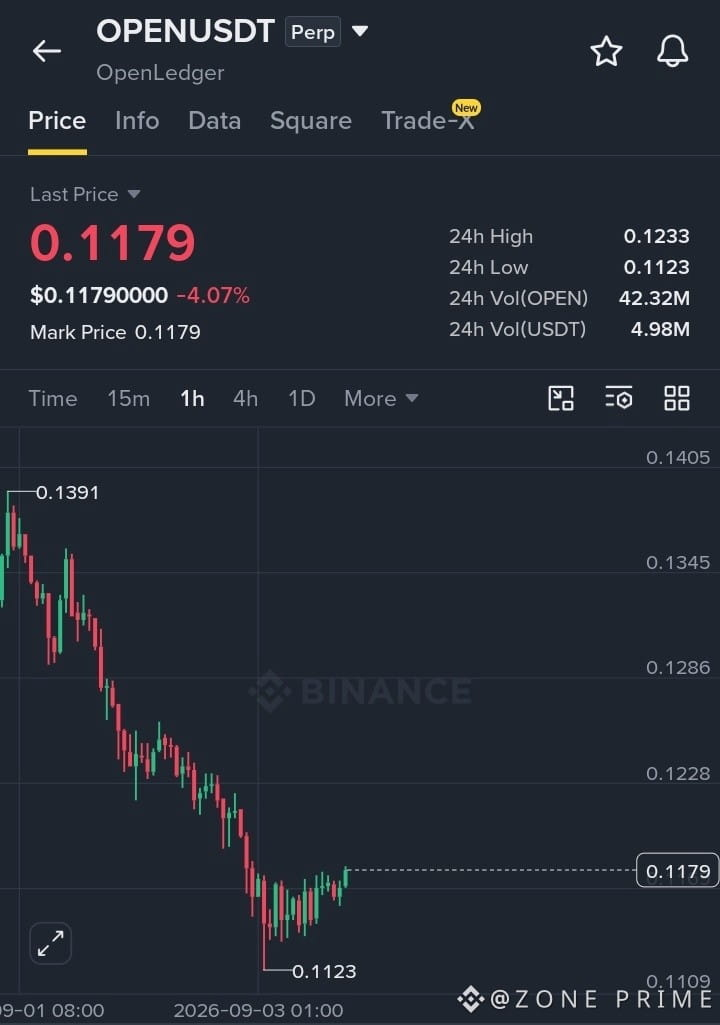

OPEN Diese Kursbewegung - bist du nervös geworden?
OPEN Oberhalb von 0.1179 drückt es gnadenlos, ich stocke nicht auf.
Preis und Volumen weichen etwas voneinander ab, bei OPEN entscheide ich mich erst mal zu verkaufen.
Wenn es nicht weiter steigt, sollte man aussteigen; bei OPEN bin ich bereit, Gewinne mitzunehmen.
Das war's an Fakten, mehr gibt's nicht. 📌
Was denkst du bei dieser Kursbewegung: Schüttelt der Hauptakteur die Hände locker oder verteilt er seine Positionen?
OPEN Hin und her reiben - bewegst du dich oder bleibst du stehen?
#OPEN #交易日记
OPEN Oberhalb von 0.1179 drückt es gnadenlos, ich stocke nicht auf.
Preis und Volumen weichen etwas voneinander ab, bei OPEN entscheide ich mich erst mal zu verkaufen.
Wenn es nicht weiter steigt, sollte man aussteigen; bei OPEN bin ich bereit, Gewinne mitzunehmen.
Das war's an Fakten, mehr gibt's nicht. 📌
Was denkst du bei dieser Kursbewegung: Schüttelt der Hauptakteur die Hände locker oder verteilt er seine Positionen?
OPEN Hin und her reiben - bewegst du dich oder bleibst du stehen?
#OPEN #交易日记
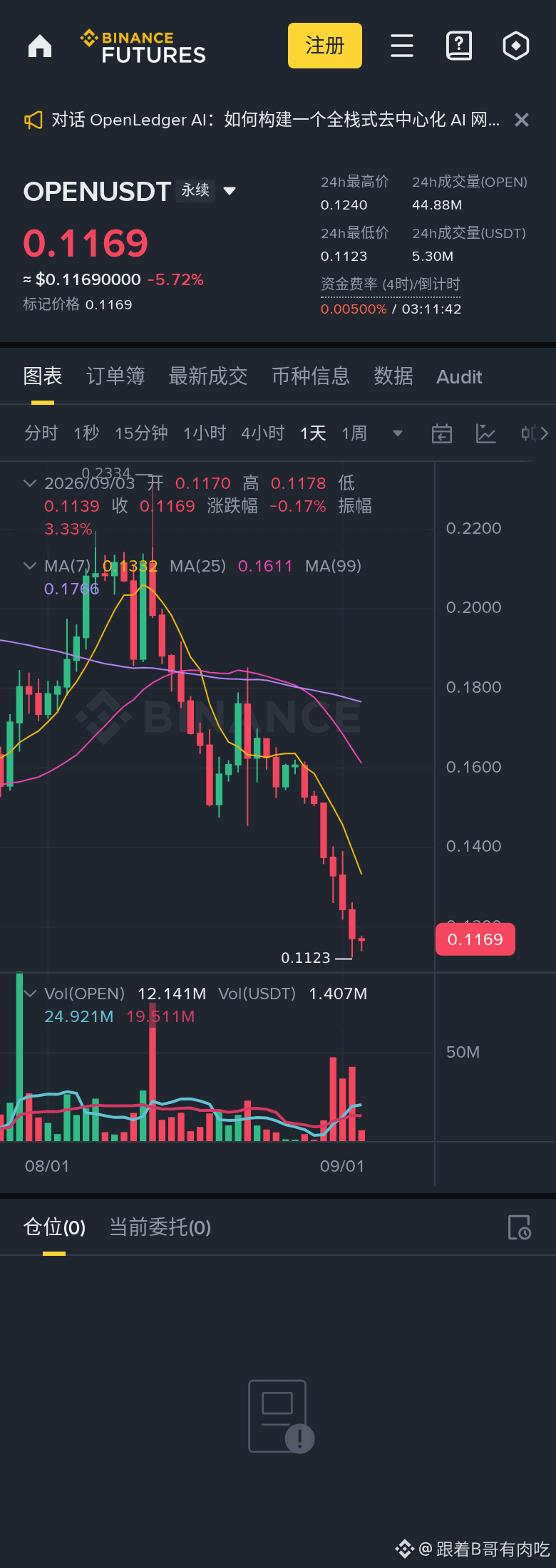
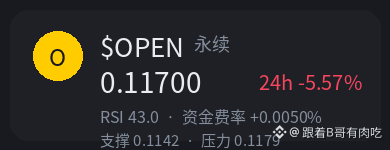
$OPEN WIEDERHOLT DAS MÄRZ-FRAKTAL, WÄHREND SICH DIE GLEITENDEN DURCHSCHNITTE FÜR EINEN EXPLOSIVEN AUSBRUCH AUSRICHTEN! ⚡ 🚀
Einstieg: 0.1157 ⚡
Ziel: 0.1171 - 0.1200 🚀
Stop-Loss: 0.1128 ⚠️
$OPEN spiegelt sein charakteristisches März-Expansionsfraktal wider, während sich die Dynamik der gleitenden Durchschnitte direkt über der wichtigen Nachfrage zusammenzieht. 📊 Die zugrunde liegende Struktur zeigt klare Anzeichen einer geduldigen institutionellen Positionierung, während der Verkaufsdruck bei jedem Retest auf niedrigeren Zeitebenen schnell abnimmt.
Da Käufer um 0.1157 aktiv werden, begünstigt der Momentum-Pfad einen raschen Anstieg in Richtung der oberen Liquiditätszonen. ⚡ Das Chance-Risiko-Verhältnis verschafft hier disziplinierten Tradern einen klaren Vorteil, um die nächste Aufwärtsbewegung mitzunehmen. 💬 Gehst du diesem Move voraus, bevor der Widerstand bricht, oder wartest du auf eine stärkere Bestätigung? 👇
⚠️ Keine Finanzberatung. Verwalte immer dein Risiko. 🛡️
🏷️ #OPEN #LongSetup #Crypto #Breakout #Trading
🔥 🎯
Einstieg: 0.1157 ⚡
Ziel: 0.1171 - 0.1200 🚀
Stop-Loss: 0.1128 ⚠️
$OPEN spiegelt sein charakteristisches März-Expansionsfraktal wider, während sich die Dynamik der gleitenden Durchschnitte direkt über der wichtigen Nachfrage zusammenzieht. 📊 Die zugrunde liegende Struktur zeigt klare Anzeichen einer geduldigen institutionellen Positionierung, während der Verkaufsdruck bei jedem Retest auf niedrigeren Zeitebenen schnell abnimmt.
Da Käufer um 0.1157 aktiv werden, begünstigt der Momentum-Pfad einen raschen Anstieg in Richtung der oberen Liquiditätszonen. ⚡ Das Chance-Risiko-Verhältnis verschafft hier disziplinierten Tradern einen klaren Vorteil, um die nächste Aufwärtsbewegung mitzunehmen. 💬 Gehst du diesem Move voraus, bevor der Widerstand bricht, oder wartest du auf eine stärkere Bestätigung? 👇
⚠️ Keine Finanzberatung. Verwalte immer dein Risiko. 🛡️
🏷️ #OPEN #LongSetup #Crypto #Breakout #Trading
🔥 🎯
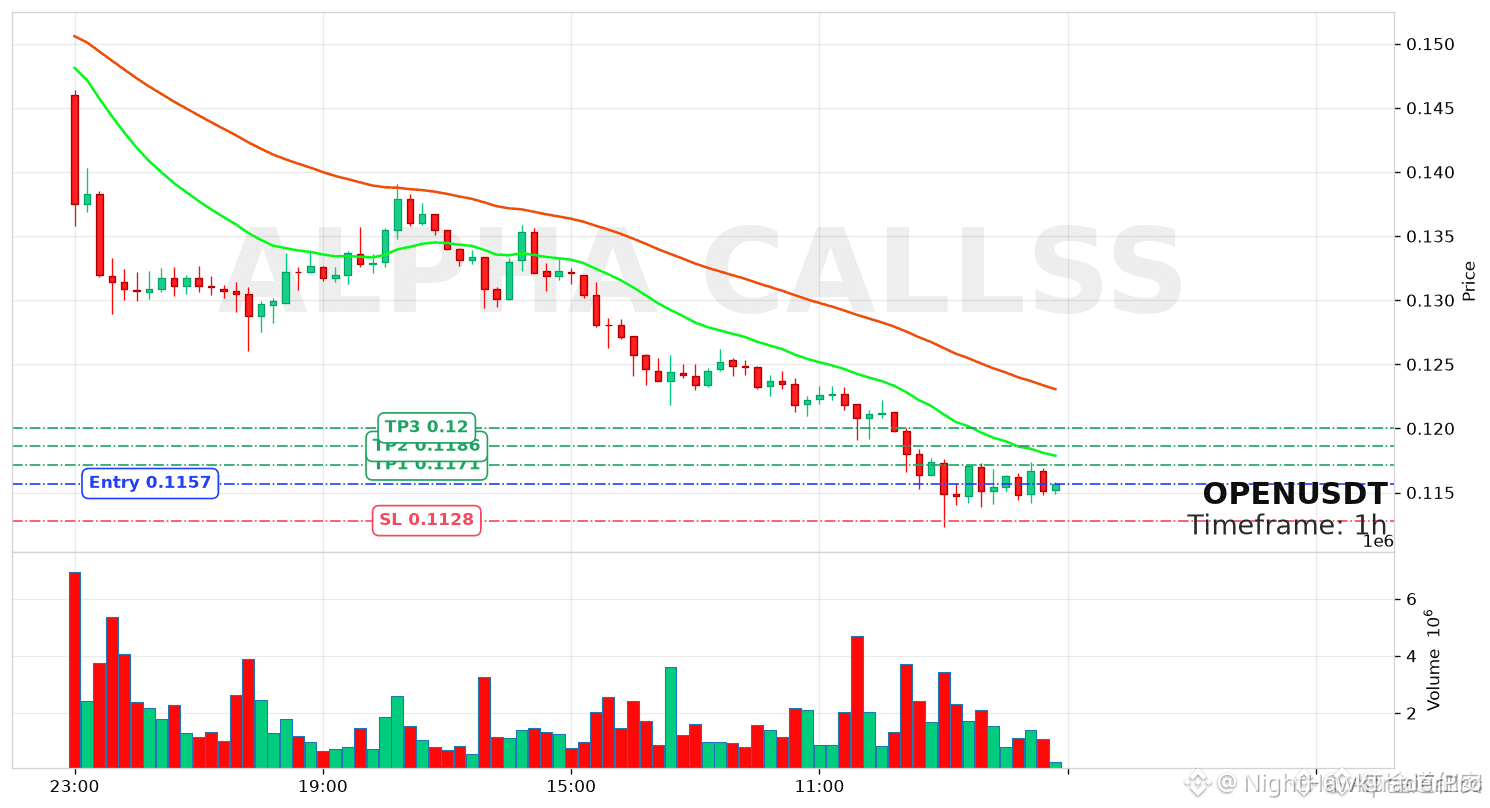
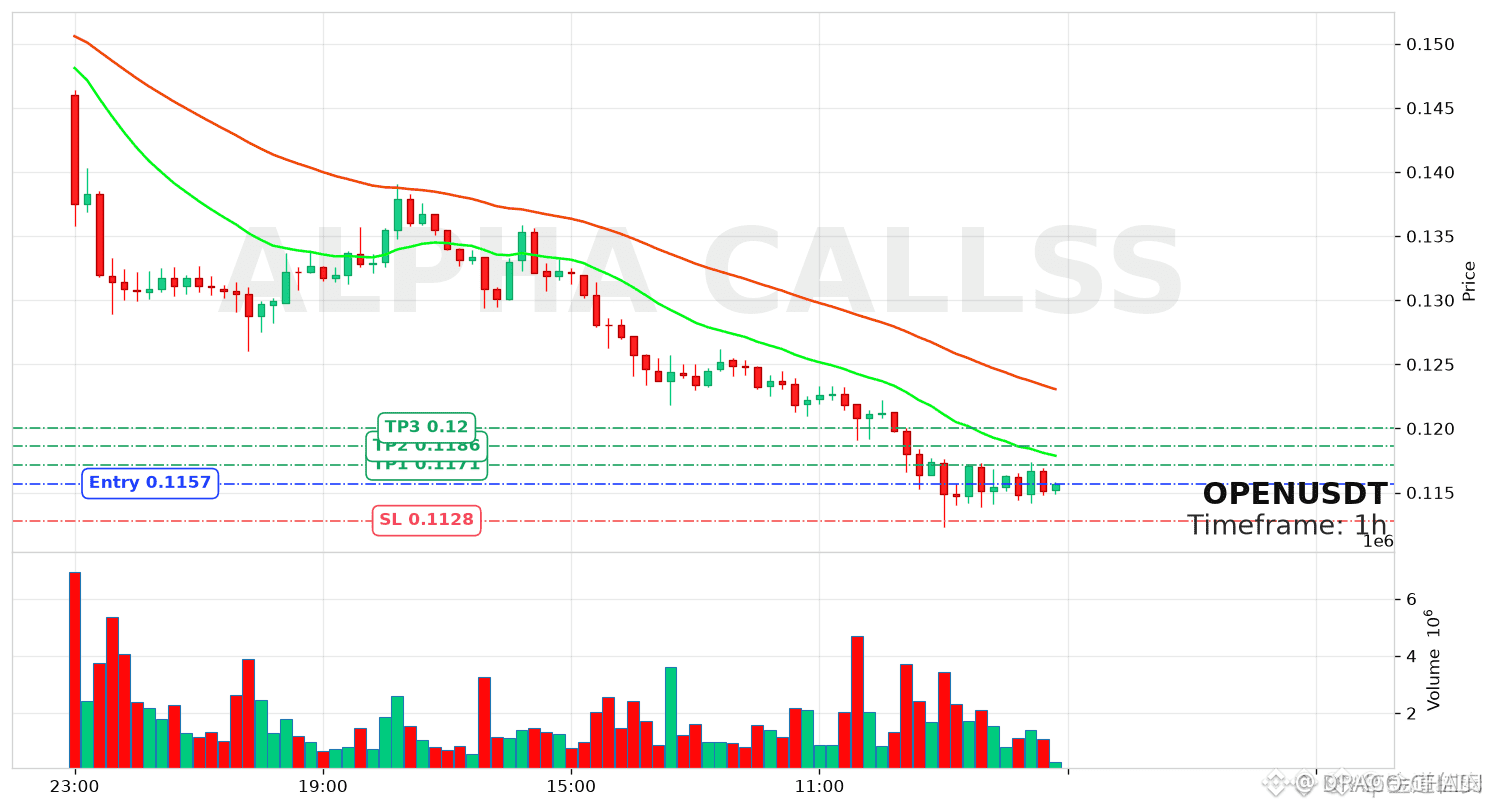
🚨 $OPEN MIRRORS MÄRZWACHTSTUM FRAKTAL, DA KÄUFER FÜR DIE NÄCHSTE EXPANSION EINSTIEGEN! 💥
Einstieg: 0.1157 ⚡
Ziel: 0.1171 - 0.1200 🚀
Stop-Loss: 0.1128 ⚠️
📌 Die Preisstruktur auf $OPEN zeigt ein überzeugendes Fraktalmuster, das die Expansion aus dem März widerspiegelt. 🔍 Smart Money verteidigt diese Zone der gleitenden-Durchschnitts-Kompression und behandelt den aktuellen Rücksetzer als erstklassige strukturelle Re-Akkumulation.
📊 Während das Abwärtsmomentum nachlässt, signalisiert der institutionelle Orderflow einen sauberen Vorstoß in Richtung der Liquiditätspools auf der Oberseite. 💡 Mit eng unterhalb der strukturellen Unterstützung verankertem Risiko bietet dieses Long-Setup ein hervorragendes Chance-Risiko-Verhältnis. 💬 Bietest du in dieser Akkumulationszone oder wartest du auf einen tieferen Sweep? 👇
⚠️ Keine Finanzberatung. Verwalte dein Risiko immer sorgfältig. 🛡️
🏷️ #OPEN #LongSetup #MarketStructure #Crypto
🔥 💎
Einstieg: 0.1157 ⚡
Ziel: 0.1171 - 0.1200 🚀
Stop-Loss: 0.1128 ⚠️
📌 Die Preisstruktur auf $OPEN zeigt ein überzeugendes Fraktalmuster, das die Expansion aus dem März widerspiegelt. 🔍 Smart Money verteidigt diese Zone der gleitenden-Durchschnitts-Kompression und behandelt den aktuellen Rücksetzer als erstklassige strukturelle Re-Akkumulation.
📊 Während das Abwärtsmomentum nachlässt, signalisiert der institutionelle Orderflow einen sauberen Vorstoß in Richtung der Liquiditätspools auf der Oberseite. 💡 Mit eng unterhalb der strukturellen Unterstützung verankertem Risiko bietet dieses Long-Setup ein hervorragendes Chance-Risiko-Verhältnis. 💬 Bietest du in dieser Akkumulationszone oder wartest du auf einen tieferen Sweep? 👇
⚠️ Keine Finanzberatung. Verwalte dein Risiko immer sorgfältig. 🛡️
🏷️ #OPEN #LongSetup #MarketStructure #Crypto
🔥 💎
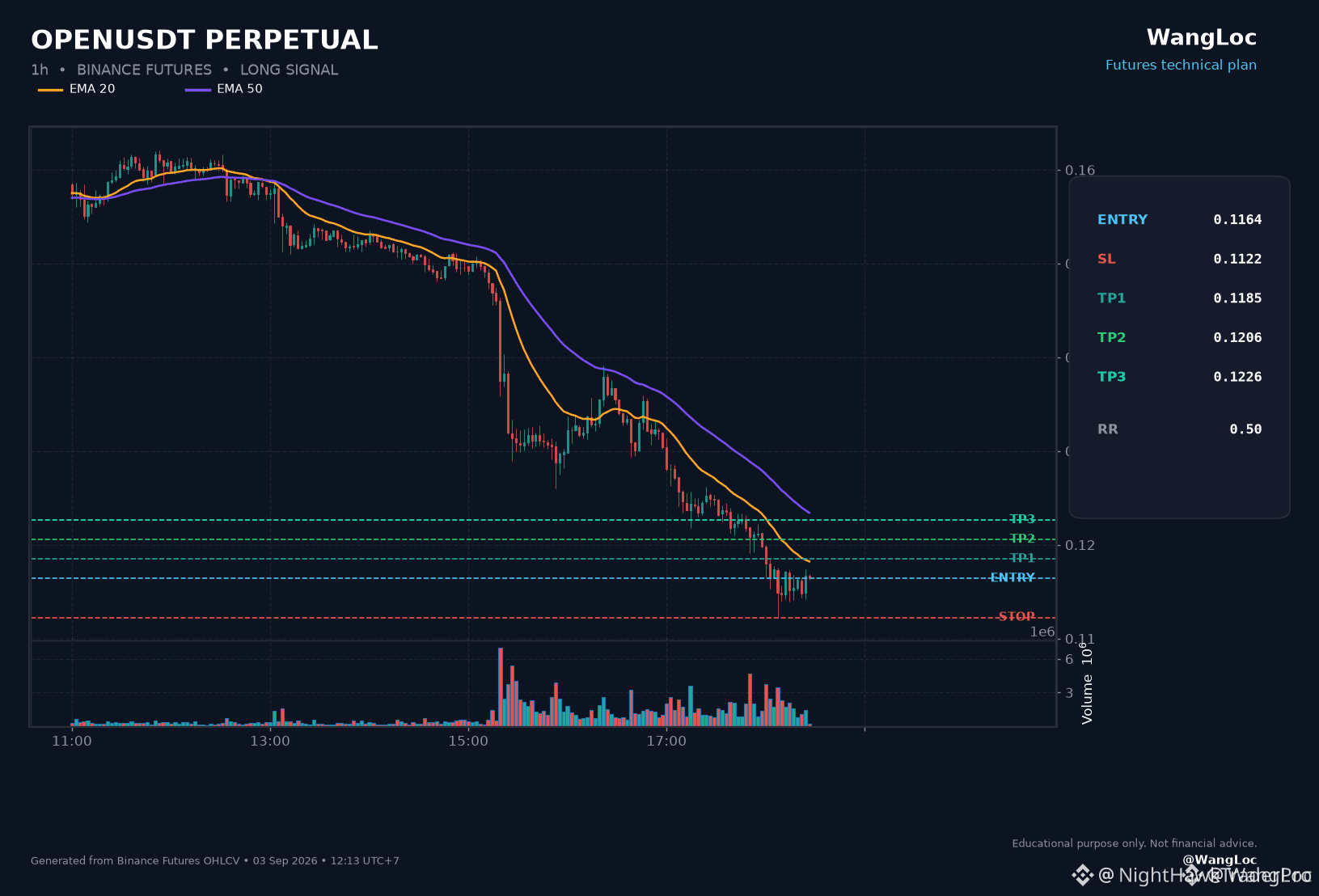
⚡ $OPEN ECHOES GOLDENES REBOUND-FRAKTAL, WÄHREND KÄUFER FÜR EINEN EXPLOSIVEN ANSTIEG AUFLADEN! 🚀
Einstieg: 0.1164 ⚡
Ziel: 0.1226 🚀
Stop-Loss: 0.1122 ⚠️
Die Preisstruktur bei $OPEN spiegelt die schnelle, V-förmige Erholung wider, die wir letzte Woche bei Makro-Assets wie Gold gesehen haben. 📊 Smart Money absorbiert still und leise die Verkaufsliquidität genau auf dem 0.1164-Niveau und bereitet damit den Boden für einen kräftigen Momentum-Wechsel nach oben. ⚡
📌 Während sich der Kaufdruck entlang dieser Nachfragezone aufbaut, zeigt der Weg des geringsten Widerstands direkt auf die oberen Orderblöcke. 💡 Mit klar definierter Ungültigkeit bietet dieses Setup ein hochwahrscheinliches R:R für disziplinierte Momentum-Trader. 💬 Bietest du diesen $OPEN Reclaim jetzt oder wartest du, bis der Widerstand zuerst nachgibt? 👇
⚠️ Keine Finanzberatung. Verwende immer ein gutes Risikomanagement. 🛡️
🏷️ #OPEN #LongSetup #Trading #Breakout #Crypto
🔥 💎
Einstieg: 0.1164 ⚡
Ziel: 0.1226 🚀
Stop-Loss: 0.1122 ⚠️
Die Preisstruktur bei $OPEN spiegelt die schnelle, V-förmige Erholung wider, die wir letzte Woche bei Makro-Assets wie Gold gesehen haben. 📊 Smart Money absorbiert still und leise die Verkaufsliquidität genau auf dem 0.1164-Niveau und bereitet damit den Boden für einen kräftigen Momentum-Wechsel nach oben. ⚡
📌 Während sich der Kaufdruck entlang dieser Nachfragezone aufbaut, zeigt der Weg des geringsten Widerstands direkt auf die oberen Orderblöcke. 💡 Mit klar definierter Ungültigkeit bietet dieses Setup ein hochwahrscheinliches R:R für disziplinierte Momentum-Trader. 💬 Bietest du diesen $OPEN Reclaim jetzt oder wartest du, bis der Widerstand zuerst nachgibt? 👇
⚠️ Keine Finanzberatung. Verwende immer ein gutes Risikomanagement. 🛡️
🏷️ #OPEN #LongSetup #Trading #Breakout #Crypto
🔥 💎

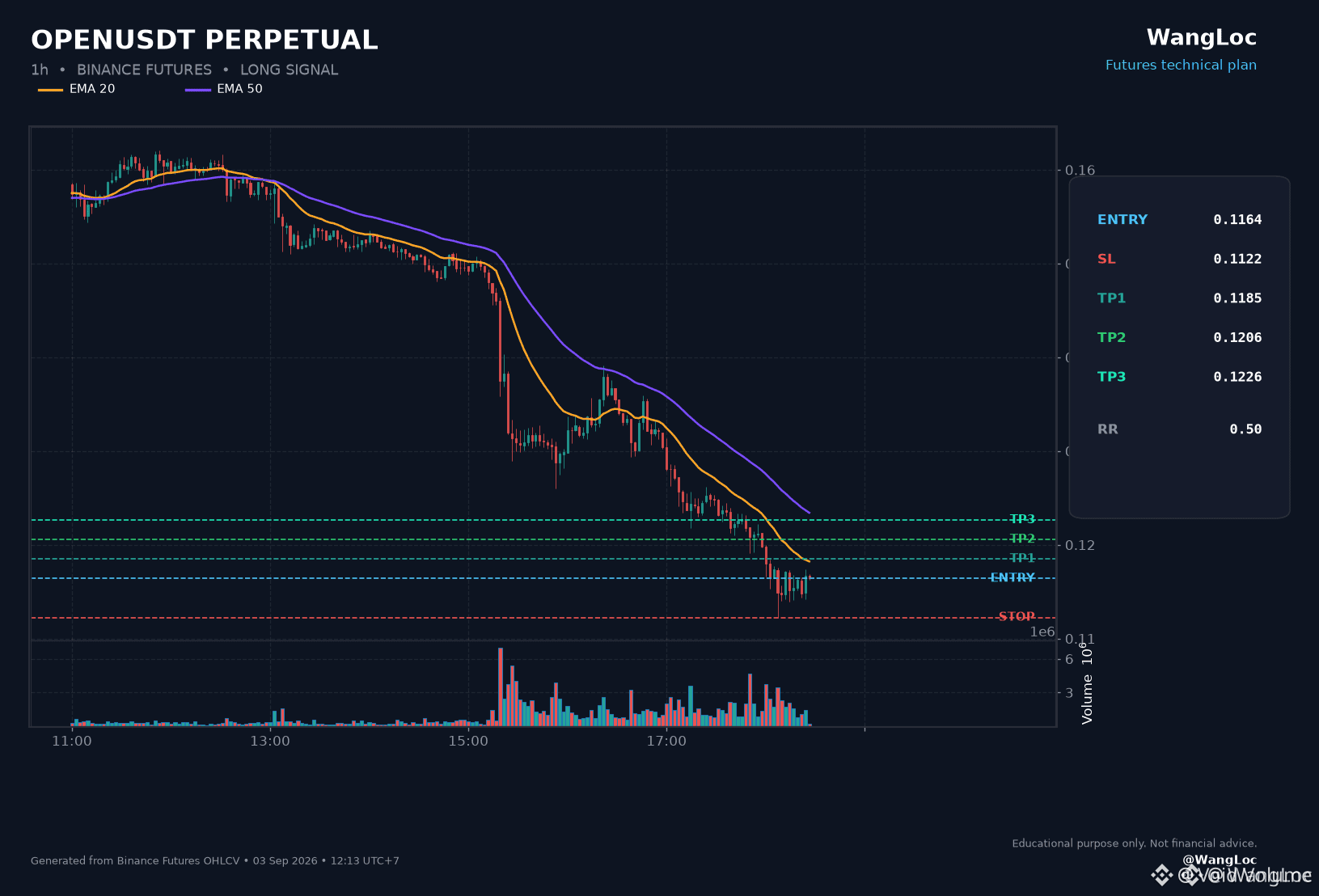
🚨 $OPEN ZEIGT EIN LEHRBUCH-MUSTER DER GOLD-RÜCKGEWINNUNG IN FRAKTALFORM, WÄHREND SMART MONEY AN DER NACHFRAGE AKKUMULIERT! 📈
Einstieg: 0.1164 ⚡
Ziel: 0.1185 - 0.1226 🚀
Stop-Loss: 0.1122 ⚠️
$OPEN zeigt ein sauberes strukturelles Fraktal und spiegelt die scharfe V-förmige Erholung wider, die in der Struktur der Gold-Asset-Klasse letzte Woche zu sehen war. 📊 Der institutionelle Orderflow hat die Nachfragebasis bei 0.1164 verteidigt, Verkaufsdruck absorbiert und gleichzeitig strukturelle Liquidität für eine Aufwärtsausweitung aufgebaut.
💡 Da sich Momentum-Indikatoren bei Sweeps auf niedrigeren Zeiteinheiten bullisch entwickeln, zeigt die Kursrichtung direkt auf die Liquiditätsziele von 0.1185 bis 0.1226. Die Ungültigkeit bleibt strikt unter den lokalen Swing-Tiefs bei 0.1122 kontrolliert. 💬 Handelst du dieses Makro-Korrelations-Setup oder wartest du auf die Bestätigung eines höheren Hochs? 👇
⚠️ Keine Finanzberatung. Manage dein Risiko immer selbst. 🛡️
🏷️ #OPEN #LongSetup #MarketStructure #Crypto #Altcoins
🎯 🦈
Einstieg: 0.1164 ⚡
Ziel: 0.1185 - 0.1226 🚀
Stop-Loss: 0.1122 ⚠️
$OPEN zeigt ein sauberes strukturelles Fraktal und spiegelt die scharfe V-förmige Erholung wider, die in der Struktur der Gold-Asset-Klasse letzte Woche zu sehen war. 📊 Der institutionelle Orderflow hat die Nachfragebasis bei 0.1164 verteidigt, Verkaufsdruck absorbiert und gleichzeitig strukturelle Liquidität für eine Aufwärtsausweitung aufgebaut.
💡 Da sich Momentum-Indikatoren bei Sweeps auf niedrigeren Zeiteinheiten bullisch entwickeln, zeigt die Kursrichtung direkt auf die Liquiditätsziele von 0.1185 bis 0.1226. Die Ungültigkeit bleibt strikt unter den lokalen Swing-Tiefs bei 0.1122 kontrolliert. 💬 Handelst du dieses Makro-Korrelations-Setup oder wartest du auf die Bestätigung eines höheren Hochs? 👇
⚠️ Keine Finanzberatung. Manage dein Risiko immer selbst. 🛡️
🏷️ #OPEN #LongSetup #MarketStructure #Crypto #Altcoins
🎯 🦈
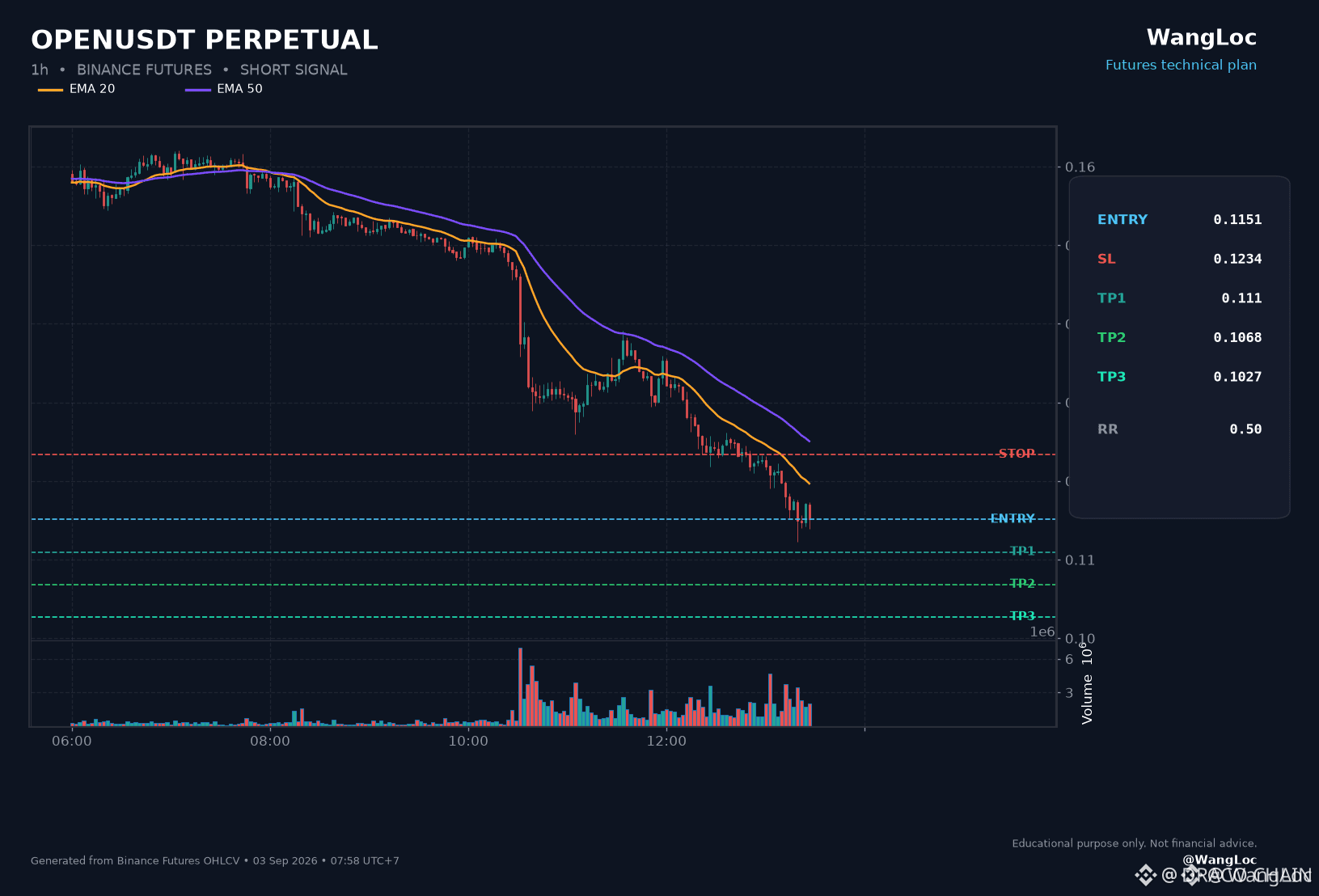
🚨 $OPEN SCHEITERT DARAN, DAS LOKALE HOCH ZU HALTEN, DA INSTITUTIONELLES ANGEBOT KÄUFER ZURÜCKWEIST! 🐻
Einstieg: 0.1151 🔻
Ziel: 0.1027 🎯
Stop-Loss: 0.1234 ⚠️
Verkäufer verteidigen aggressiv den Angebotsblock des höheren Zeitrahmens um 0.1151 und fangen späte Ausbruchskäufer in einem erschöpften Impuls ein. 📉 Der Orderflow signalisiert eine klare Verschiebung in Richtung Distribution, da das Verkaufsvolumen in weniger liquide Bereiche beschleunigt zunimmt.
📌 Da sich die Abwärtsliquidität um wichtige Nachfragezonen in Richtung 0.1027 sammelt, begünstigt die Marktstruktur stark eine anhaltende Korrektur. 🔍 Die Ungültigkeit bleibt strikt über dem lokalen strukturellen Widerstand bei 0.1234 begrenzt, um asymmetrische Risiko-Ertrags-Parameter zu bewahren. 💬 Shortest du diese Ausdehnung der Distribution oder wartest du auf ein abgefischtes Tief, bevor du neu bewertest? 👇
⚠️ Keine Finanzberatung. Verwalte immer dein Risiko. 🛡️
🏷️ #OPEN #ShortSetup #Bearish #MarketStructure #Crypto
🐻 📉
Einstieg: 0.1151 🔻
Ziel: 0.1027 🎯
Stop-Loss: 0.1234 ⚠️
Verkäufer verteidigen aggressiv den Angebotsblock des höheren Zeitrahmens um 0.1151 und fangen späte Ausbruchskäufer in einem erschöpften Impuls ein. 📉 Der Orderflow signalisiert eine klare Verschiebung in Richtung Distribution, da das Verkaufsvolumen in weniger liquide Bereiche beschleunigt zunimmt.
📌 Da sich die Abwärtsliquidität um wichtige Nachfragezonen in Richtung 0.1027 sammelt, begünstigt die Marktstruktur stark eine anhaltende Korrektur. 🔍 Die Ungültigkeit bleibt strikt über dem lokalen strukturellen Widerstand bei 0.1234 begrenzt, um asymmetrische Risiko-Ertrags-Parameter zu bewahren. 💬 Shortest du diese Ausdehnung der Distribution oder wartest du auf ein abgefischtes Tief, bevor du neu bewertest? 👇
⚠️ Keine Finanzberatung. Verwalte immer dein Risiko. 🛡️
🏷️ #OPEN #ShortSetup #Bearish #MarketStructure #Crypto
🐻 📉

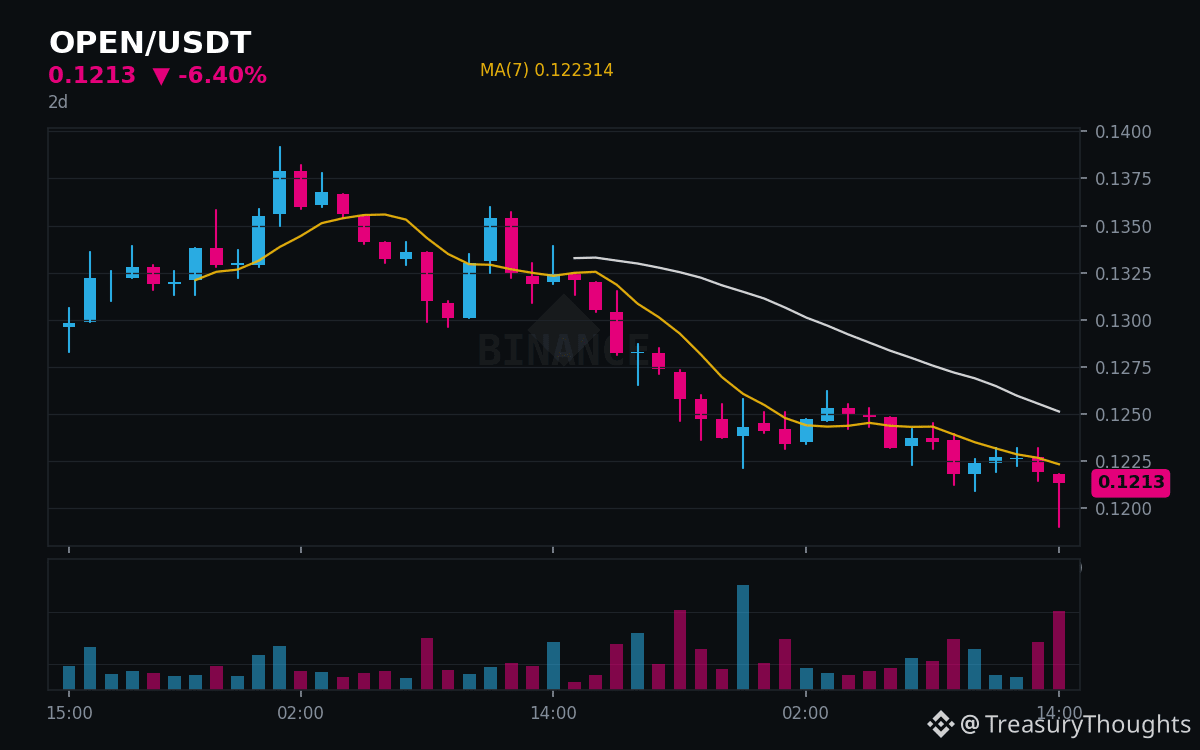
$OPEN at 0,1215 $... Ist das die Art von überverkaufter Abverkaufswelle, die sofort zurückspringt, oder nur ein weiteres tieferes Hoch, das darauf wartet, abgeschossen zu werden? 😈
Der RSI auf dem 4h liegt bei 24, also ist er ausgewaschen. Aber der Kurs liegt immer noch unter dem 20-Tage- und 50-Tage-MA, und das ist noch kein bullisches Setup. Das Volumen liegt zudem nur bei 1,85 Mio. $, also ist diese Bewegung zwar echt, aber nicht gerade explosiv.
Wenn er beginnt, 0,12 $ sauber zurückzuerobern und darüber zu halten, erwarte ich einen schnellen Squeeze. Wenn er dieses Gebiet erneut verliert, wird das Chart wahrscheinlich weiter ausbluten wie ein schwacher $XRP Bounce, der nie Kaufinteresse findet. 📉
Longs zahlen immer noch drauf, was normalerweise zeigt, dass die Masse in die falsche Richtung lehnt. Genau das beobachte ich.
Was ist hier dein Kursziel?
#OPEN
#Crypto
#Binance
Der RSI auf dem 4h liegt bei 24, also ist er ausgewaschen. Aber der Kurs liegt immer noch unter dem 20-Tage- und 50-Tage-MA, und das ist noch kein bullisches Setup. Das Volumen liegt zudem nur bei 1,85 Mio. $, also ist diese Bewegung zwar echt, aber nicht gerade explosiv.
Wenn er beginnt, 0,12 $ sauber zurückzuerobern und darüber zu halten, erwarte ich einen schnellen Squeeze. Wenn er dieses Gebiet erneut verliert, wird das Chart wahrscheinlich weiter ausbluten wie ein schwacher $XRP Bounce, der nie Kaufinteresse findet. 📉
Longs zahlen immer noch drauf, was normalerweise zeigt, dass die Masse in die falsche Richtung lehnt. Genau das beobachte ich.
Was ist hier dein Kursziel?
#OPEN
#Crypto
#Binance

$OPEN durchbrach das untere Donchian-Band um 15 m, das Volumen liegt um ein Vielfaches über dem Durchschnitt 📉
Wenn sich der Markt insgesamt jedoch dreht, kann sich der Short schnell in ein Rauschen verwandeln.
🔴 Short (Ausbruch aus der Spanne nach unten) | Donchian Breakout
Einstieg: 0.119939 - 0.12042
Stop: 0.121504
Take-Profit: 0.1179
RSI: n/v | Score: 96/100
R:R 1:1.7
Informationsbeitrag, keine Finanzberatung.
#OPEN #Trading
Wenn sich der Markt insgesamt jedoch dreht, kann sich der Short schnell in ein Rauschen verwandeln.
🔴 Short (Ausbruch aus der Spanne nach unten) | Donchian Breakout
Einstieg: 0.119939 - 0.12042
Stop: 0.121504
Take-Profit: 0.1179
RSI: n/v | Score: 96/100
R:R 1:1.7
Informationsbeitrag, keine Finanzberatung.
#OPEN #Trading

$OPEN STEHT GERADE IM MITTELPUNKT DES BINANCE-SQUARES
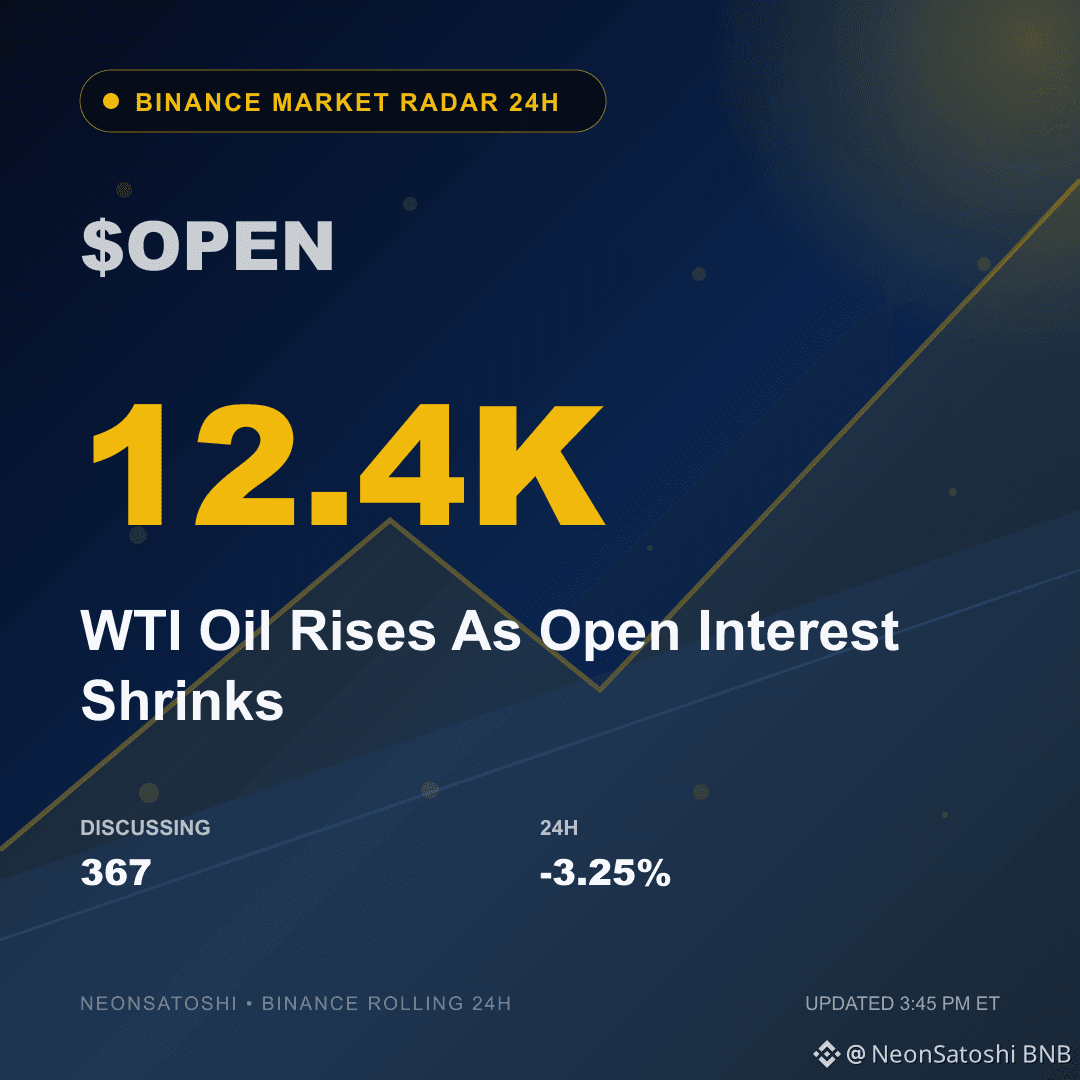
#WTIOilRisesAsOpenInterestShrinks belegt mit 12,4K Themenaufrufen und 367 diskutierenden Personen den 4. Platz.
Auf Binance wird OPEN bei 0,1278 USDT gehandelt, -3,25 % über 24H und bei 10 % der heutigen Spanne. Der Preis bleibt nahe dem unteren Ende, daher braucht eine Erholung weiterhin eine Rückeroberung.
Würdest du diesem Move folgen oder auf einen besseren Einstieg warten?
#OPEN
#WTIOilRisesAsOpenInterestShrinks belegt mit 12,4K Themenaufrufen und 367 diskutierenden Personen den 4. Platz.
Auf Binance wird OPEN bei 0,1278 USDT gehandelt, -3,25 % über 24H und bei 10 % der heutigen Spanne. Der Preis bleibt nahe dem unteren Ende, daher braucht eine Erholung weiterhin eine Rückeroberung.
Würdest du diesem Move folgen oder auf einen besseren Einstieg warten?
#OPEN
💥 $OPEN BEREITET SICH AUF EINE EXPLOSIVE IMPULSWELLE VOR, WÄHREND KÄUFER DEN VERKAUFSDRUCK AUFSCHLUCKEN! ⚡
Einstieg: 0.13816 - 0.13844 ⚡
Ziel: 0.14191 🚀
Stop Loss: 0.12600 ⚠️
Käufer verteidigen die Marke von 0.1380 erbittert und absorbieren aggressiv jede kleine Schwäche, während Orderbücher klare Anzeichen einer starken Akkumulation zeigen. 📊 Der Schwung zieht sich auf kleineren Timeframes eng zusammen und signalisiert eine bevorstehende Ausweitung der Volatilität in Richtung der wichtigen Liquiditäts-Overhead-Zonen.
Da das Verkaufsvolumen vollständig versiegt, kippt der Weg des geringsten Widerstands stark nach oben, sobald die Marktstruktur eindeutig bullish umschlägt. ⚡ Das Chance-Risiko-Profil hier bietet ein außergewöhnlich starkes Momentum-Fenster mit hoher Überzeugung. 💬 Stellst du dich jetzt vorn an oder wartest du die Bestätigung des Ausbruchs ab? 👇
⚠️ Keine Finanzberatung. Behandle immer dein Risiko. 🛡️
🏷️ #OPEN #Crypto #LongSetup #Trading #Breakout
🎯 ⚡
Einstieg: 0.13816 - 0.13844 ⚡
Ziel: 0.14191 🚀
Stop Loss: 0.12600 ⚠️
Käufer verteidigen die Marke von 0.1380 erbittert und absorbieren aggressiv jede kleine Schwäche, während Orderbücher klare Anzeichen einer starken Akkumulation zeigen. 📊 Der Schwung zieht sich auf kleineren Timeframes eng zusammen und signalisiert eine bevorstehende Ausweitung der Volatilität in Richtung der wichtigen Liquiditäts-Overhead-Zonen.
Da das Verkaufsvolumen vollständig versiegt, kippt der Weg des geringsten Widerstands stark nach oben, sobald die Marktstruktur eindeutig bullish umschlägt. ⚡ Das Chance-Risiko-Profil hier bietet ein außergewöhnlich starkes Momentum-Fenster mit hoher Überzeugung. 💬 Stellst du dich jetzt vorn an oder wartest du die Bestätigung des Ausbruchs ab? 👇
⚠️ Keine Finanzberatung. Behandle immer dein Risiko. 🛡️
🏷️ #OPEN #Crypto #LongSetup #Trading #Breakout
🎯 ⚡
Anmelden und weiter Inhalte entdecken